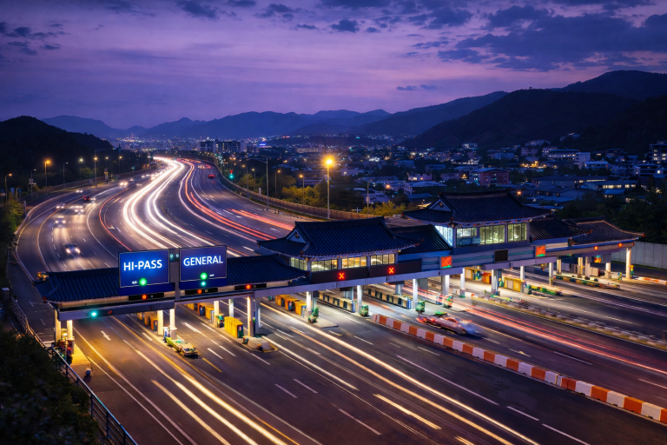
🔹 What This Guide Covers
If you’ve already read the guide on urban driving in Korea, this section shifts the focus to Korean highways and expressways.
Highway driving comes with a different set of practical considerations. In this guide, you’ll learn how the Korean toll payment system works, how highway bus-only lanes operate and when restrictions apply, and what to do if a traffic accident happens on an expressway.
The goal is not to overwhelm you with legal detail, but to help you understand the systems that matter most on Korean highways so you can drive more confidently and avoid common mistakes.
✅ How Toll Payment Works in Korea
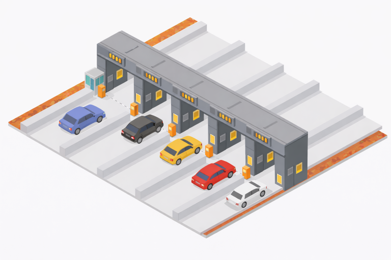
Most major expressways in Korea are toll roads, which means you must pay a fee to use them.
These tolls are collected at toll gates located at highway entrances and exits.
The amount you pay depends on vehicle type and distance traveled.
There are two main ways to pay:
- Hi-Pass (electronic toll collection)
- Manual payment (cash or eligible transit-linked card*)
Understanding the difference between these two systems is important, because each uses separate toll lanes.
If you enter the wrong lane without realizing it, drivers sometimes slow down abruptly or attempt last-second lane changes near the toll plaza. This create dangerous situations, especially on busy expressways.
Knowing your payment method in advance helps you choose the correct lane early and avoid unnecessary risk.
🔍 What Is Hi-Pass (Electronic Toll Collection)?
Hi-Pass is Korea’s electronic toll payment system.
It works similarly to U.S. systems like E-ZPass or SunPass.
Instead of stopping at a toll booth and paying manually, Hi-Pass allows you to drive through dedicated Hi-Pass lanes, where the toll is automatically charged to a registered device.
Why many drivers use it:
- No stopping at toll booths
- Faster traffic flow on busy highways
- More convenient for long-distance driving
If you plan to drive regularly in Korea, Hi-Pass can save time and reduce hassle at toll gates.
However, setting up and registering Hi-Pass involves several steps, and the process can vary depending on vehicle registration and payment setup.
If you're considering getting Hi-Pass, see the detailed setup guide below:
👉 [How to Register and Set Up Hi-Pass in Korea] (link)
🔍 How to Pay at the Toll Booth If You Don’t Have Hi-Pass

If your vehicle doesn’t have a Hi-Pass unit, you must use a manual payment lane.
As shown in the illustration above, Hi-Pass lanes are usually marked by blue pavement guide lines starting about 2 km (approximately 1.2 miles) before the toll gate.
These blue lines lead directly to the dedicated Hi-Pass booths.
If you are paying manually, simply follow a lane without the blue guide line and enter a standard toll booth.
Here’s how it typically works:
- Approach the manual lane
- Stop at the window or payment machine
- Pay when prompted
Payment methods generally include:
- Cash (KRW)
- T-money card
- Korean-issued credit/debit cards with transit functionality
However, most Korean credit/debit cards that work at toll booths require a linked Korean bank account.
For U.S. service members, the practical options are usually:
- Cash
- T-money card
Some toll booths have automated card terminals, while others may have an attendant assisting with payment.
🔍 What to Do If You Enter the Wrong Lane (Hi-Pass by Mistake)
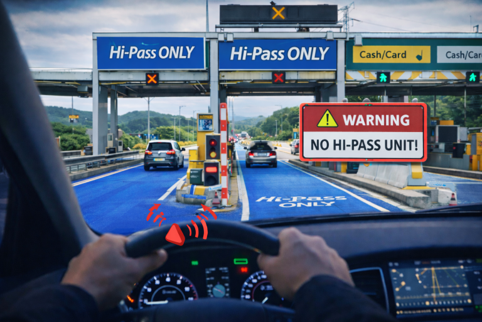
Most incidents at Hi-Pass toll lanes happen because drivers panic and brake suddenly.
Expressways move at high speed, and sudden stops near a toll plaza can create dangerous situations.
If you accidentally enter a Hi-Pass-only lane without a Hi-Pass unit, do not stop abruptly, change lanes suddenly, or attempt to reverse. Instead, remain calm and continue driving through the Hi-Pass lane.
Even if your vehicle does not have a Hi-Pass device, you are allowed to pass through the Hi-Pass toll gate. You may hear a warning sound, but that does not require you to stop.
Afterward, the unpaid toll will typically be processed through the system, and a notice will be mailed to the registered address of the vehicle owner. As long as you pay the toll within the stated deadline, there is generally no additional fine or penalty beyond the original toll amount.
However, if unpaid tolls are ignored for an extended period, additional charges may apply — in some cases significantly higher than the original toll.
The key point is simple: Do not panic. Do not stop. Do not reverse. Safely pass through the toll gate and handle the payment afterward.
🔍 How to Pay an Unpaid Toll Notice
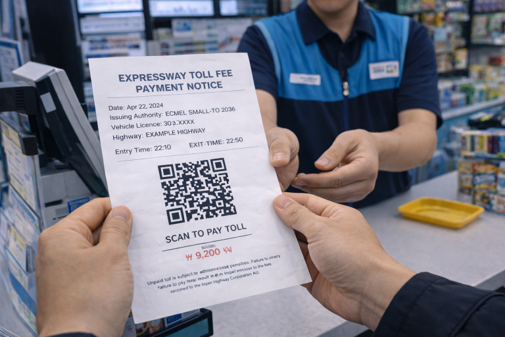
As explained above, if you pass through a Hi-Pass lane without a registered device, the unpaid toll is typically mailed to the vehicle’s registered address.
There are several ways to pay the amount listed on the notice.
However, for U.S. service members who may not have a Korean bank account, one of the simplest and most accessible options is paying at a GS25 convenience store.
Korea Expressway Corporation partners with GS25, allowing unpaid tolls to be checked and paid at stores nationwide.
📌 How to Pay at GS25
If you have the mailed notice:
Bring the toll notice (which usually includes a QR code) to the counter and show it to the cashier.
If you don’t have the notice:
You can tell the staff that you are there to pay an unpaid toll and provide your vehicle number. The store can look up the outstanding amount through the system.
📌 Payment Methods
At GS25, payment is generally accepted by:
- Cash
- Korean-issued credit cards
(Availability may vary slightly by location.)
📌 Additional Notes
- You may be asked to verify identity when paying by vehicle number.
- If the payment deadline listed on the notice has already passed, convenience store payment may not be available. In that case, you may need to contact a toll office (📞1588-2504) directly.
- Once paid, the unpaid toll is typically updated in the system promptly.
✅ Highway Bus-Only Lanes

Korea uses clearly marked bus-only lanes to improve traffic flow and maintain bus schedules.
As shown in the illustration above, these lanes are typically marked in blue, making them visually distinct from regular lanes.
⚠️This section refers specifically to highway bus-only lanes. While bus-only lanes in cities may look similar — often marked in blue as well — the eligibility rules and operating conditions are different on highways compared to urban roads.
During operating hours, general passenger cars may not use these highway bus-only lanes unless they meet specific conditions.
If a vehicle does not meet the requirements and still uses the bus-only lane, a fine notice may be issued.
🔍Operating Hours
Highway bus-only lanes do not operate 24 hours a day.
Their operating times can vary depending on weekdays, weekends, and national holidays.
In general:
- Weekdays: 7:00 AM – 9:00 PM
- Holiday periods (the day before through the last day of major holidays): 7:00 AM – 1:00 AM (The following day)

🔍 Eligible Vehicle Types
The following vehicles are allowed to use highway bus-only lanes:
- Buses
- Passenger vehicles with 9 seats or more
- For vehicles with 9–12 seats, at least 6 occupants must be on board
If a 9–12 seat vehicle does not have at least 6 passengers, it does not qualify and is treated as a regular passenger vehicle.
🔍 Enforcement
Highway bus-only lane violations are monitored through:
- CCTV systems installed along expressways
- Traffic police patrol vehicles
Enforcement may occur without a physical stop at the scene, and violation notices can be issued afterward.
🔍 Fines for Violations
Improper use of a highway bus-only lane during operating hours can result in fines that typically range from ₩60,000 to ₩70,000 (approximately $45–$55 USD, depending on exchange rate).
Exact amounts may vary slightly depending on vehicle classification and specific circumstances.
🔍 Practical Advice
As noted above, highway bus-only lane rules are generally more straightforward and clearly defined than those in city bus lanes.
However, if you are driving and cannot clearly remember the specific requirements — such as operating hours or vehicle eligibility — it may be safer not to use the bus-only lane.
Choosing a regular lane in uncertain situations can help you avoid potential fines and unnecessary complications.
✅ Comparison with U.S. Highway Lane Rules
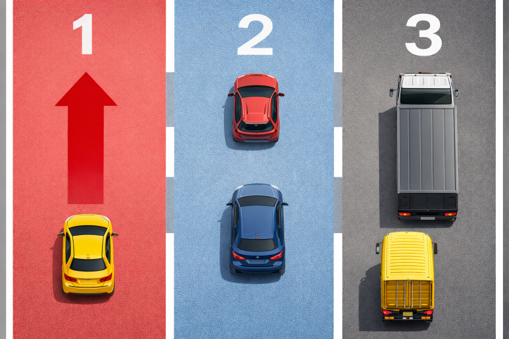
The basic principle is similar to many U.S. highways: the far-left lane is intended for passing, not continuous cruising. After overtaking, drivers are expected to return to a regular driving lane.
However, Korean highways also follow a more structured lane designation system based on vehicle type:
- Lane 1 (far left): Passing lane only
- Lane 2: General driving lane for passenger cars and small vans
- Right-side lanes (3–4): Primarily used by large buses, trucks, and heavy vehicles
While U.S. highways often follow a similar informal pattern, Korea formally regulates lane designation under traffic law. Continuous driving in the passing lane without overtaking may be treated as a violation.
Additionally, on certain highways, the far-left lane may operate as a bus-only lane during specific hours, which changes normal passing-lane expectations.
In practice, if you drive in Lane 2 by default, use Lane 1 only to pass, and follow posted signage, you’ll generally stay within proper lane use.
✅ What to Do After a Traffic Accident in Korea
⚠️ Stop Immediately and Check for Injuries
If anyone is injured — even slightly — stop immediately and assist.
Under Korean law, drivers involved in an accident must:
- Stop at the scene
- Assist injured persons
- Exchange identifying information
Do not leave the scene, even if the damage appears minor.
Leaving the scene without taking necessary action can result in serious legal consequences.
If there are injuries, call 119 (emergency services) right away.
⚠️ Prevent Secondary Accidents

Highway accidents in Korea can escalate quickly due to speed and traffic density.
If your vehicle can move:
- Safely move it to the shoulder or a nearby safe zone.
If it cannot:
- Turn on hazard lights immediately
- Alert approaching traffic
On highways, do not remain inside the vehicle.
Move yourself and passengers beyond the guardrail to a safe area.
⚠️ Document Everything Before Moving Vehicles
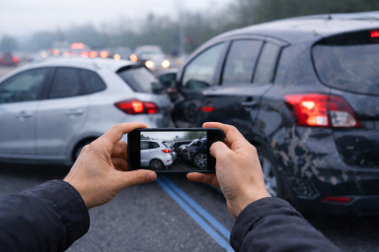
Before vehicles are moved, take photos:
- Overall vehicle positions
- Damage on both vehicles
- License plates
- Road signs and lane markings
Dashcam footage can be extremely important in Korea for determining fault.
Also exchange:
- Name
- Phone number
- Insurance information
- Vehicle registration details
⚠️ Contact Police and Insurance
In Korea, accidents often involve formal reporting.
If injuries are involved, or if fault is disputed, call 112 (police).
If it’s a minor accident with only vehicle damage and traffic is not obstructed, it may be handled through insurance.
For U.S. military personnel:
- Contact your Korean auto insurance provider immediately
- Follow any command-specific reporting procedures required by your unit
(It’s a good idea to know your insurance emergency number before you need it.)
⚠️ Highway-Specific Assistance

If the accident occurs on an expressway:
- Note the highway number
- Check exit numbers or roadside markers
- Identify direction of travel
Korea Expressway Corporation provides emergency assistance:
📞 1588-2504
Standard passenger vehicles may qualify for towing to the nearest safe area (such as a rest stop).
Frequently Asked Questions (FAQ)
❓ Are rest areas common on Korean highways?
A. Yes. Rest areas are frequent and well-developed. Most include food courts, convenience stores, restrooms, and fuel stations. On long routes, you’ll typically encounter a rest stop every 20–40 km.
❓ Are there separate speed limits for different lanes?
A. No. The posted speed limit applies to all lanes unless otherwise indicated. However, slower vehicles should generally stay in the right lanes, and overtaking is expected on the left.
❓ What are “section speed cameras” (average speed enforcement)?
A. Some highway sections measure your average speed between two camera points, not just your speed at a single location. This means slowing down only near a visible camera does not prevent a violation if your average speed exceeds the limit.
❓ Can I refuel directly on the highway?
A. Yes. Many highway rest areas have gas stations. However, not every rest stop includes fuel, so if your tank is low, plan accordingly before entering long stretches.
❓ What happens if I miss my highway exit?
A. You cannot reverse or stop on the highway. Continue to the next exit and re-enter or adjust your route. Attempting to back up on an expressway is illegal and extremely dangerous.