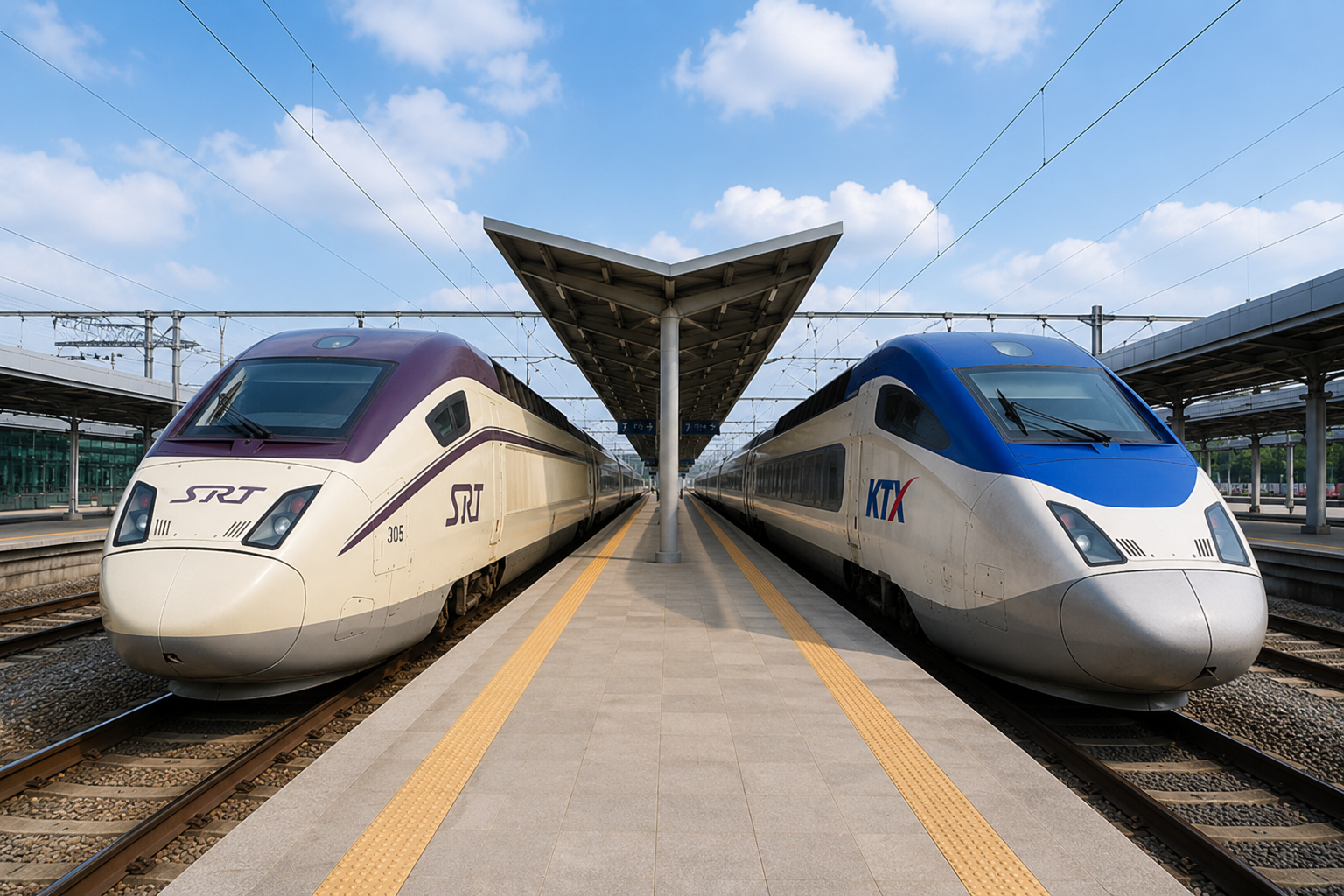
🔹 What This Guide Covers: SRT & KTX (High-Speed Rail in Korea)
When you try to explore a different side of the peninsula during leave and search a long-distance route on NAVER Map, you’ll often notice SRT or KTX included as part of the route. For trips like Seoul to Busan, these trains are usually the main transportation option, replacing what would otherwise be long bus rides or domestic flights.
In Korea, long-distance travel is built around high-speed rail, and in many cases, it’s more practical than flying. There’s no airport-style process — no early check-in, no security lines — you can arrive shortly before departure and board immediately. For USFK personnel traveling on pass or leave, this makes SRT and KTX the most time-efficient way to move across the country, with major cities like Busan, Daegu, or Gwangju reachable in just a few hours.
Both trains serve the same purpose — fast, reliable, long-distance travel — but the key difference is which stations they stop at. Depending on where you are stationed, one may be significantly more convenient than the other.
Outside of Seoul, both systems cover major cities, but their station locations and stopping patterns are different, which is why choosing based on your nearest or most convenient station is what actually matters.
That said, you don’t need to overthink it — NAVER Map will usually show you the best route automatically, and in most cases, simply choosing the fastest option is the right call. In terms of actual experience, both trains are very similar: clean, punctual, and easy to use, with no meaningful difference in comfort for most users.
In the next sections, this guide will walk through how to book both SRT and KTX using the official websites and mobile apps, focusing on methods that are straightforward and practical for USFK personnel, along with common mistakes to avoid and what to do if issues come up.
✅ What Is SRT?
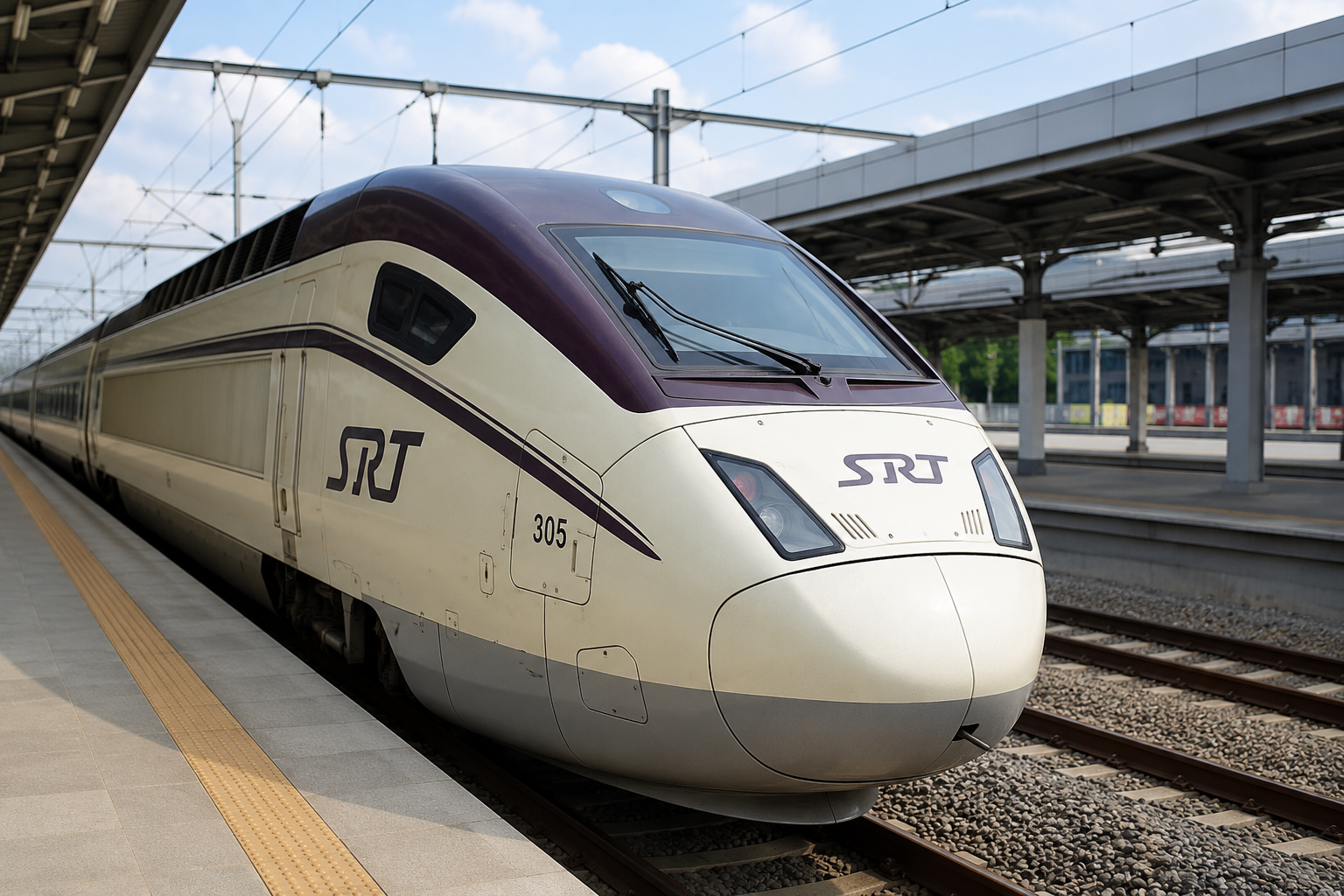
SRT (Super Rapid Train) is one of Korea’s two major high-speed rail systems and is commonly used for long-distance travel across the country. For many USFK personnel, it becomes especially useful during weekends, passes, or leave when traveling to cities far outside the local area. Unlike regular trains or intercity buses, SRT is designed for fast travel between major regions of Korea. Depending on the route, trips that would normally take several hours by car or bus can often be completed much faster and with significantly less hassle.
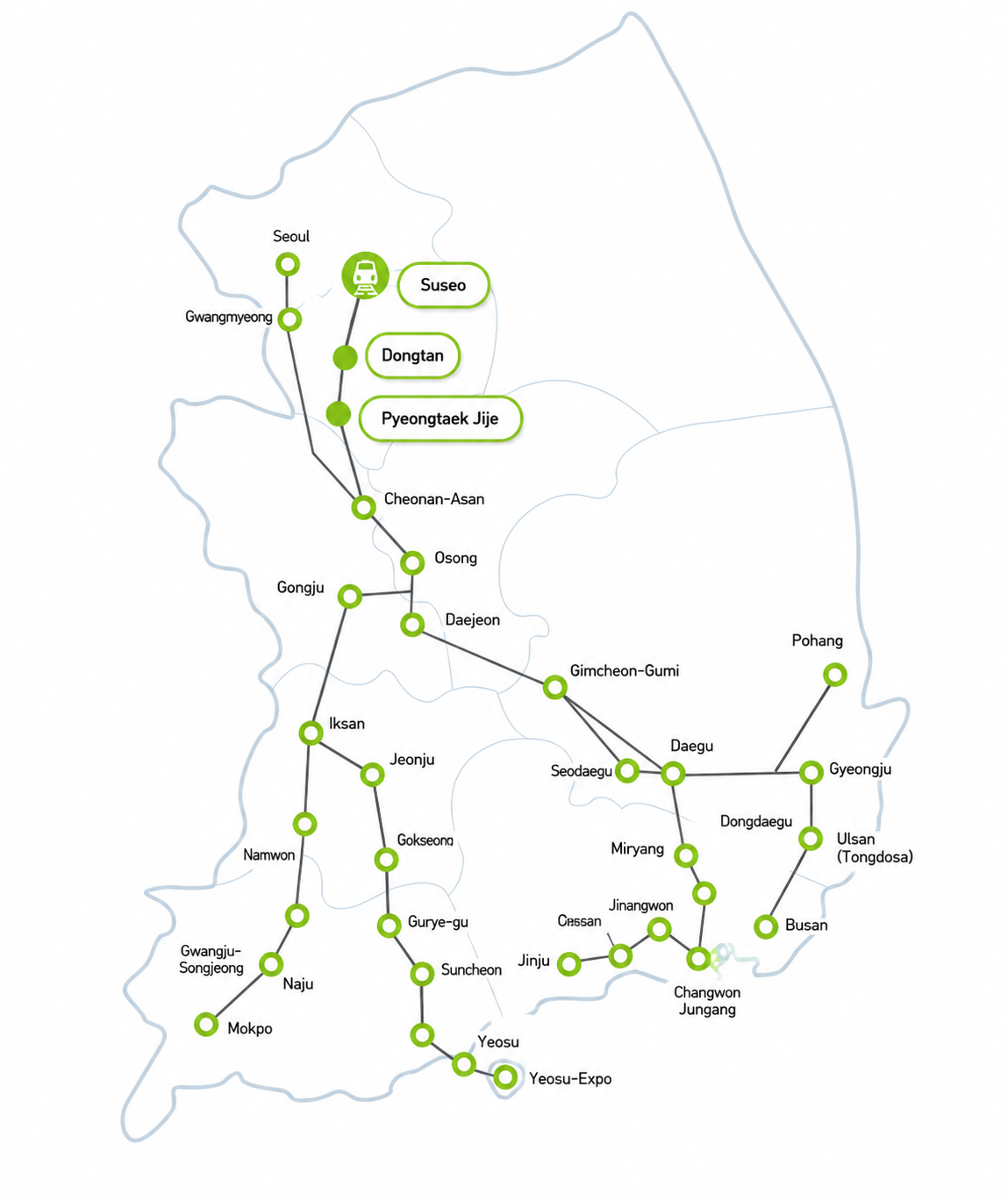
As mentioned before, one of the biggest differences between SRT and KTX is different set of stations and routes. As shown in the map above, SRT primarily connects major cities through stations such as Suseo, Dongtan, Pyeongtaek Jije, Daegu, Ulsan, Busan, Gwangju-Songjeong, and Mokpo.
For many USFK personnel, one important station is Pyeongtaek Jije Station, since it is relatively close to the Camp Humphreys area and often becomes the most convenient starting point for long-distance travel. Personnel staying around southern Seoul may also find Suseo Station easier to access compared to Seoul Station or Yongsan Station used by KTX.
There are three main ways to book SRT tickets:
- through the official website
- through the mobile app
- through in-person station ticketing
The next sections will walk through each method separately.
✅ Booking SRT Through the Official Website
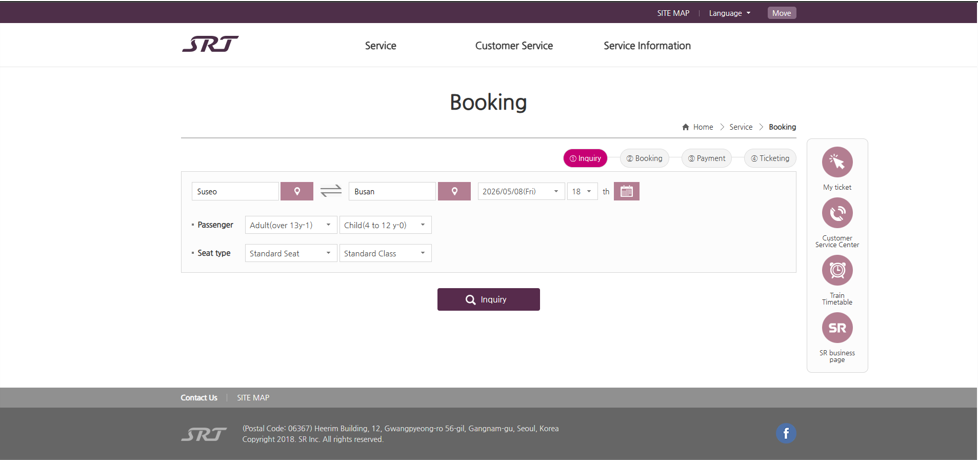
https://etk.srail.kr/hpg/hra/fr/01/selectScheduleList.do?pageId=TE0101000000
One of the easiest ways to book SRT tickets is through the official SRT website. The site supports English and allows users to search routes, reserve seats, and receive mobile tickets without needing to visit the station in person.
The simplest way to use it is by first searching your trip in NAVER Map. When NAVER Map recommends an SRT route, it will usually tell you:
- which station to board at
- which station to get off at
Those are the station names you should enter into the Departure and Arrival fields on the booking page.
For example:
- If NAVER Map tells you to board at Suseo Station and get off at Busan Station
- Enter:
- Departure:
Suseo - Arrival:
Busan
- Departure:
Then select:
- travel date
- departure time
- number of passengers
and search available trains.
✅ Booking SRT Through the Mobile App
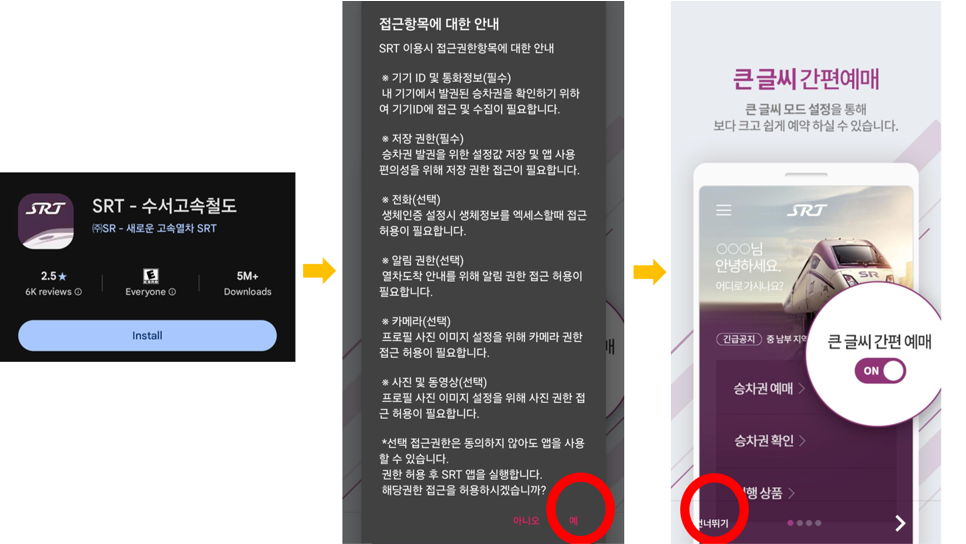
For many USFK personnel, the SRT mobile app is usually the most convenient booking method once everything is set up. It allows you to search routes, reserve seats, access mobile tickets, and manage reservations directly from your phone without needing to print anything.
The official app is called “SRT - 수서고속철도” and is available on both iPhone and Android devices.
After installing and opening the app for the first time, several permission requests will appear in Korean because the language has not been changed to English yet. Tap the area highlighted with the red circle in the image above.
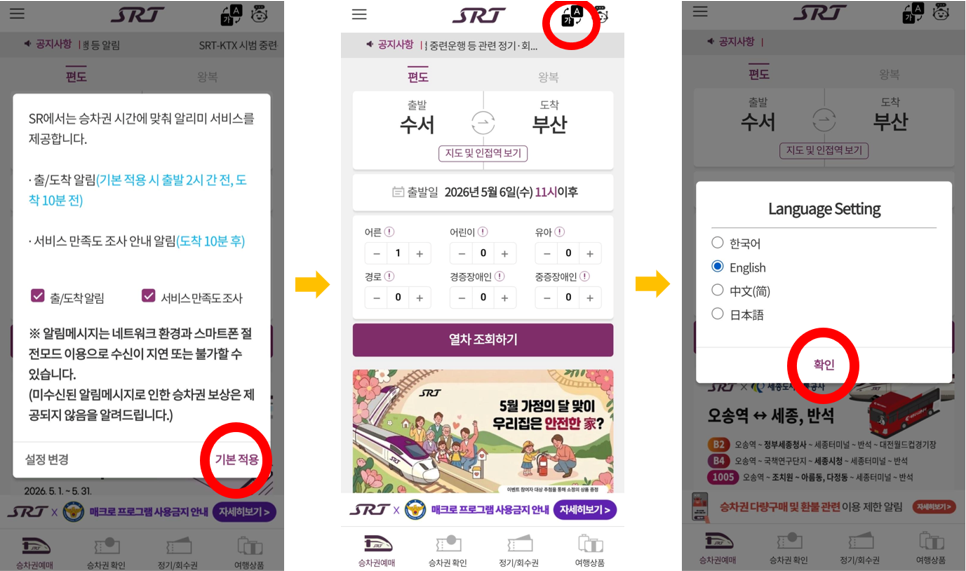
To change the app language to English, follow the steps shown in the images above and tap the areas highlighted with the red circles in order.
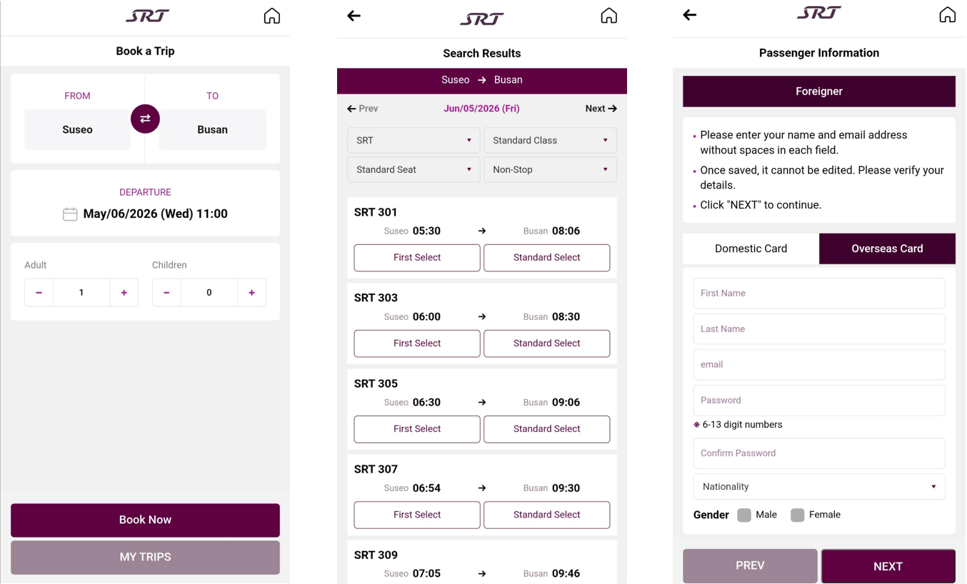
1️⃣ Searching for a Route
Just like with the website method, the easiest approach is to first check your trip in NAVER Map.
If NAVER Map recommends SRT:
- enter the departure station shown in NAVER Map
- enter the arrival station shown in NAVER Map
- select your travel date and passenger count
Then tap Book Now button.
The app will display available trains for that route and time period.
2️⃣ Selecting Seats
After searching, you’ll see a list of available trains along with:
- departure time
- arrival time
- travel duration
- seat availability
Most users will simply choose:
- Standard Seat
- Standard Class
unless they specifically want first-class seating.
Once selected, continue to the passenger information and payment screen.
3️⃣ Foreign Card / Overseas Card Notice
One important thing for USFK personnel:
When entering payment information, make sure to select:
- Overseas Card
You may also be asked for:
- passport-style name format
- nationality
- email address
Make sure your name matches your payment information closely to avoid issues during processing.
✅ Buying SRT Tickets at the Station
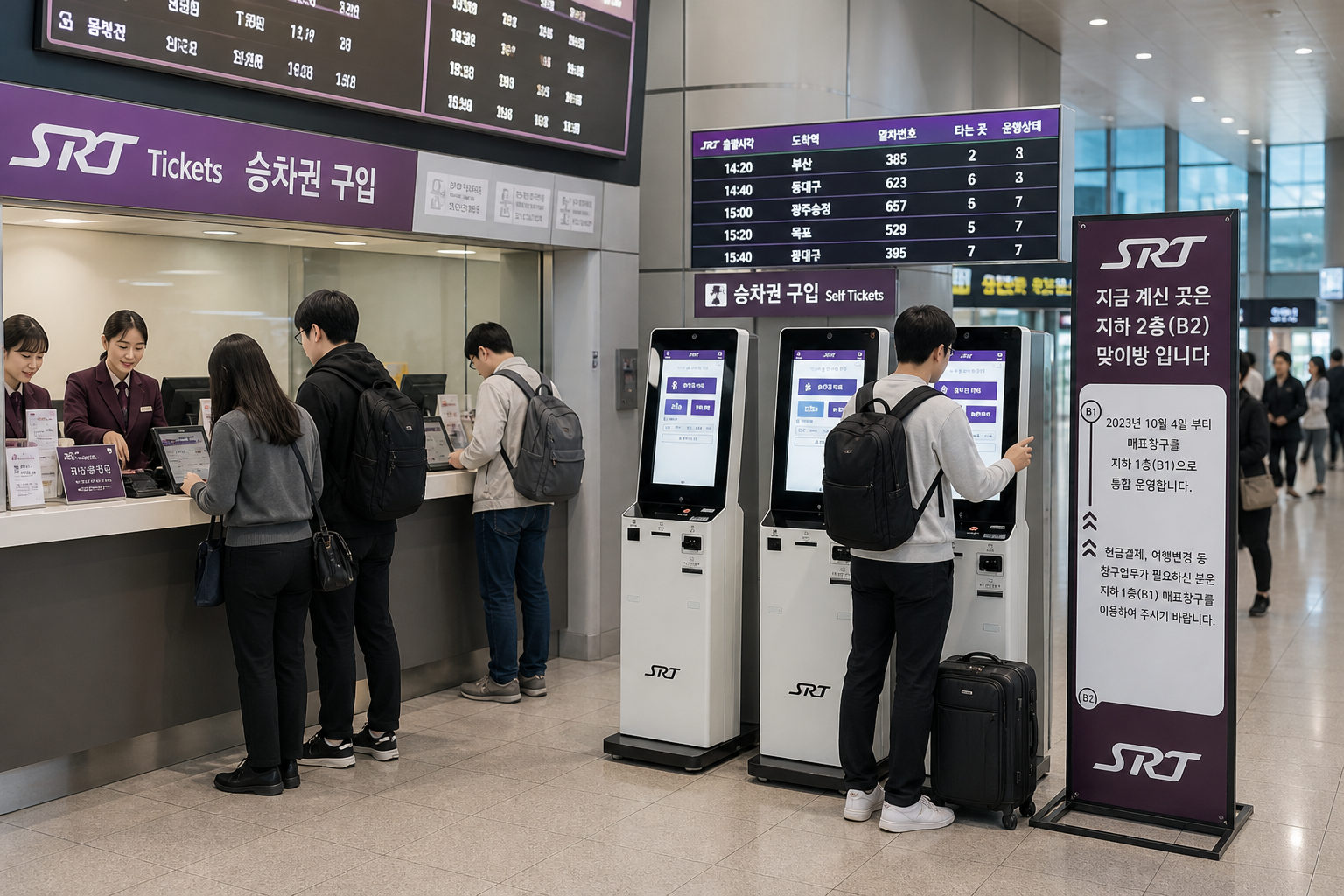
SRT tickets can also be purchased directly at the station, either through staffed ticket counters or self-service kiosks. If regular seats are still available, both methods are usually straightforward and support standard card payments, including many international cards.
For USFK personnel, on-site purchase is often useful when:
- online payment fails
- plans change last minute
- or you simply prefer handling the reservation in person
However, the biggest thing to understand is that buying tickets at the station comes with more risk compared to booking ahead online.
Popular travel times — especially:
- Friday evenings
- Sunday evenings
- Korean holidays
- long weekends
can sell out much faster than many travelers expect. Routes to cities like Busan or Daegu are especially affected during peak travel periods.
Because of this, relying on:
“I’ll just buy the ticket when I get there”
can sometimes leave you with no seated tickets remaining.
🔍 Standing Tickets (입석)
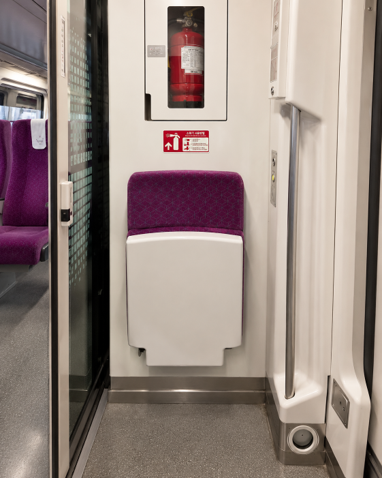
If all regular seats are sold out, stations may still offer standing tickets (입석) for certain trains.
Standing tickets are typically purchased directly at the station rather than through the normal online reservation process, and they are mainly intended for situations where:
- you absolutely need to board that specific train
- but seated tickets are no longer available
They are also usually cheaper than regular tickets by roughly:
- about 15%
However, there are important differences compared to normal seated tickets.
A standing ticket does not guarantee a seat. Depending on crowd levels, you may:
- stand for most of the trip
- move multiple times during the journey
For shorter rides this may be manageable, but for longer trips like Seoul ↔ Busan, it can become uncomfortable fairly quickly.
Because of this, standing tickets are best viewed as:
👉 a backup option when normal seats are already sold out
rather than the preferred way to travel long distance.
✅ Important Things to Know Before Booking/Boarding
While the system is relatively straightforward, there are a few things USFK personnel should know beforehand.
🔍 Tickets sell out much faster than many expect
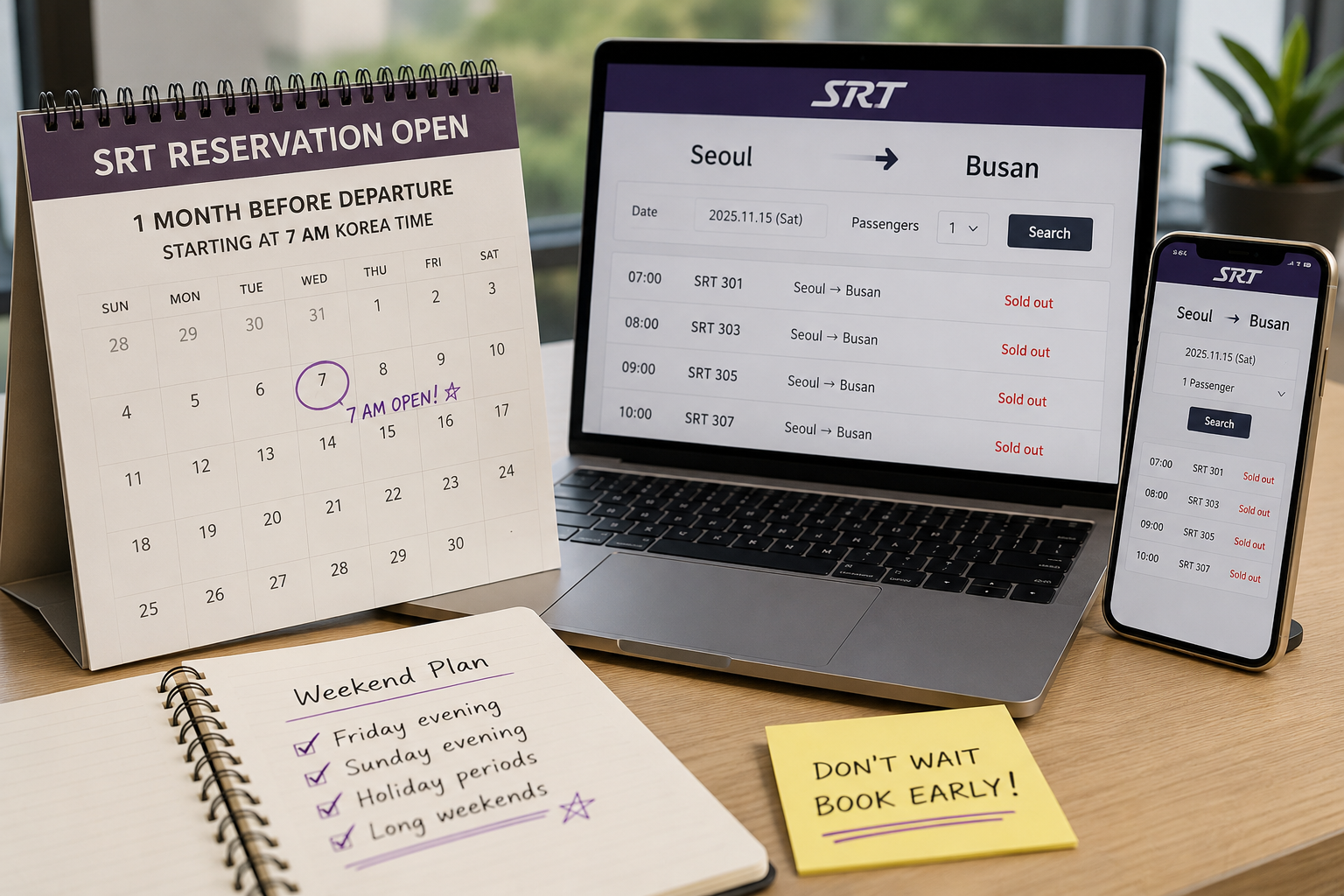
SRT reservations open:
- 1 month before departure
- starting at 7 AM Korea time
Realistically, popular travel times can sell out very quickly, especially:
- Friday evenings
- Sunday evenings
- holiday periods
- long weekends
A common mistake is assuming:
“I’ll just buy it the same day.”
That approach works far less often in Korea than it does with many U.S. rail systems. If you already know your leave or weekend plans, booking early is strongly recommended.
🔍 Always verify your platform and car number before boarding
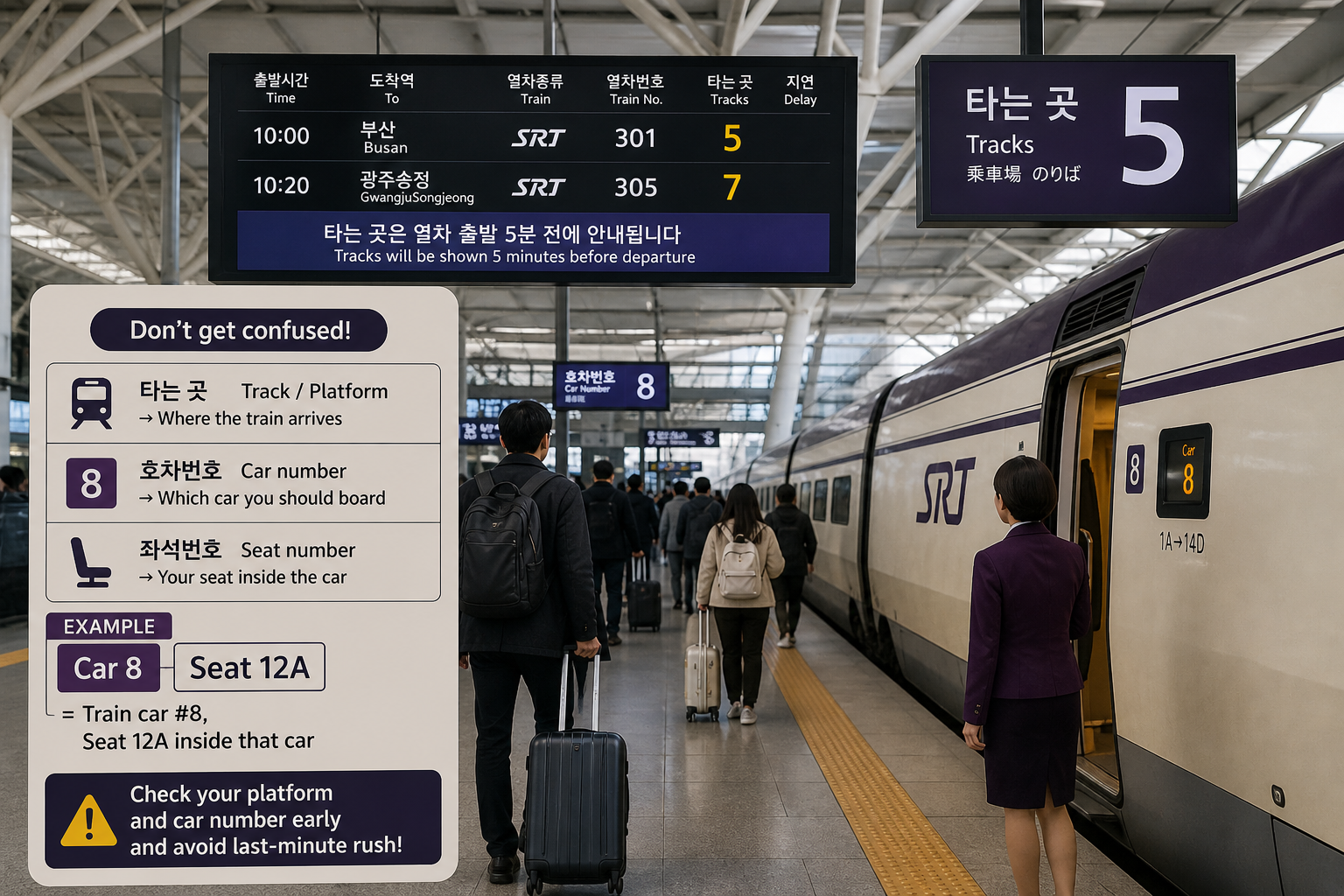
Korean train stations often announce platform numbers relatively late compared to what some travelers may expect.
Many first-time users confuse:
- Track / Platform
- Car number
- Seat number
Example:
Car 8 Seat 12A- means:
- train car #8
- seat 12A inside that car
It’s common to see travelers rushing at the last minute after realizing they were standing at the wrong section of the platform.
🔍 Ticket Inspection & Preparing Your Ticket Before Boarding
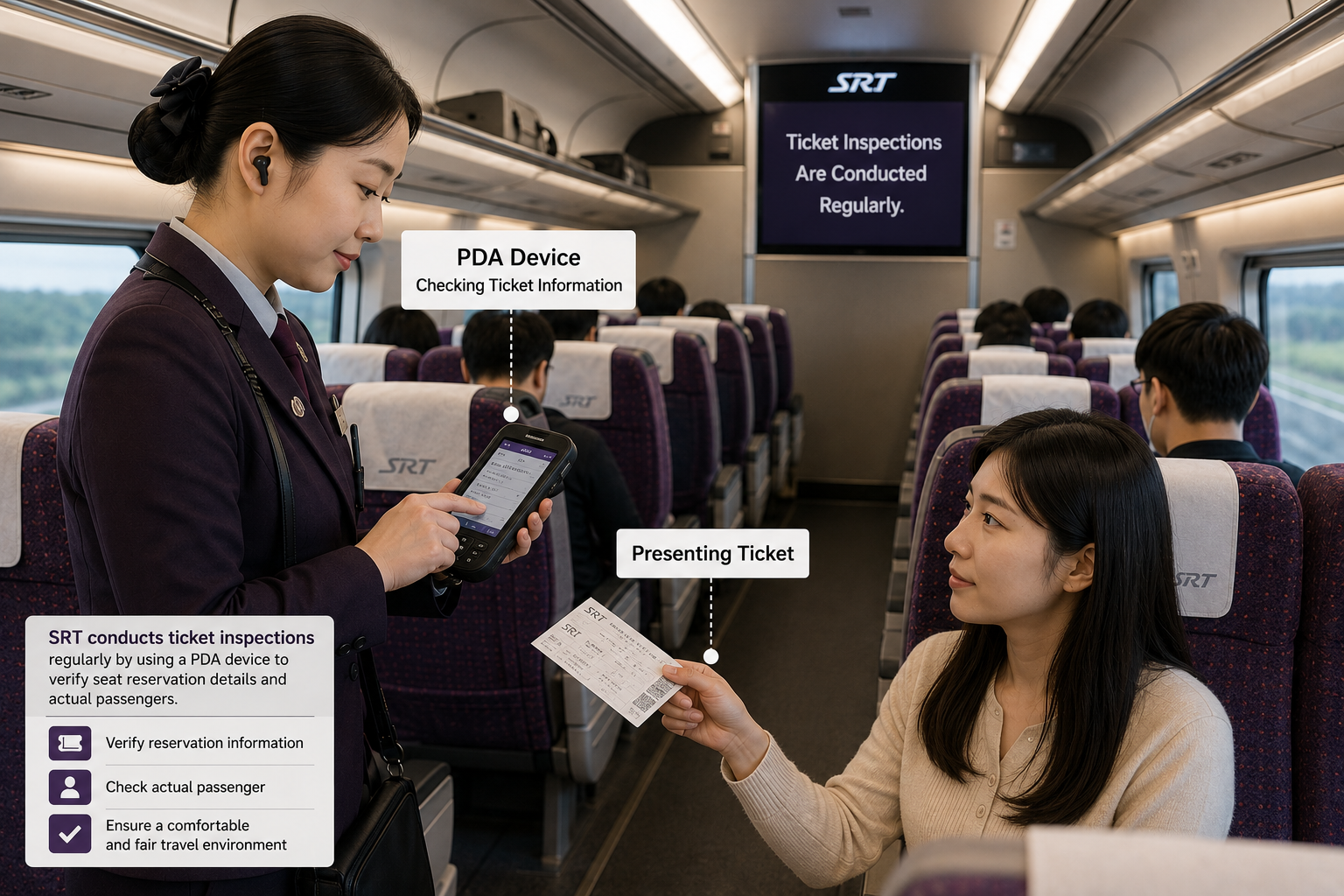
One final thing to know is that Korean high-speed trains regularly conduct ticket inspections during the trip. Train staff often walk through the cars using handheld PDA devices to compare reservation information with actual passengers on board.
Because of this, you should always have your ticket ready before boarding.
For standing tickets purchased at the station, this is simple:
- keep the physical paper ticket issued at purchase
- show it to staff if requested
For regular SRT reservations, the process depends on how you booked your ticket.
If using the SRT mobile app:
- Download the app
- Select departure station, arrival station, travel date, and passenger count
- Search available trains
- Select seats and complete payment
- A mobile ticket with a QR code is automatically issued inside the app
If using the SRT website:
- Access the official website
- Reserve the ticket and complete payment
- Choose either:
- Home Ticket (printable ticket)
- Smart Ticket (mobile ticket transfer)
As long as you have either:
- the QR/mobile ticket
- printed ticket
- or station-issued paper ticket
ready before boarding, the inspection process is usually very quick and straightforward.
Next, an overview of KTX will be provided. Since the seat reservation process, precautions, and general procedures are largely similar to SRT, only a brief explanation will be included.
✅ What Is KTX?
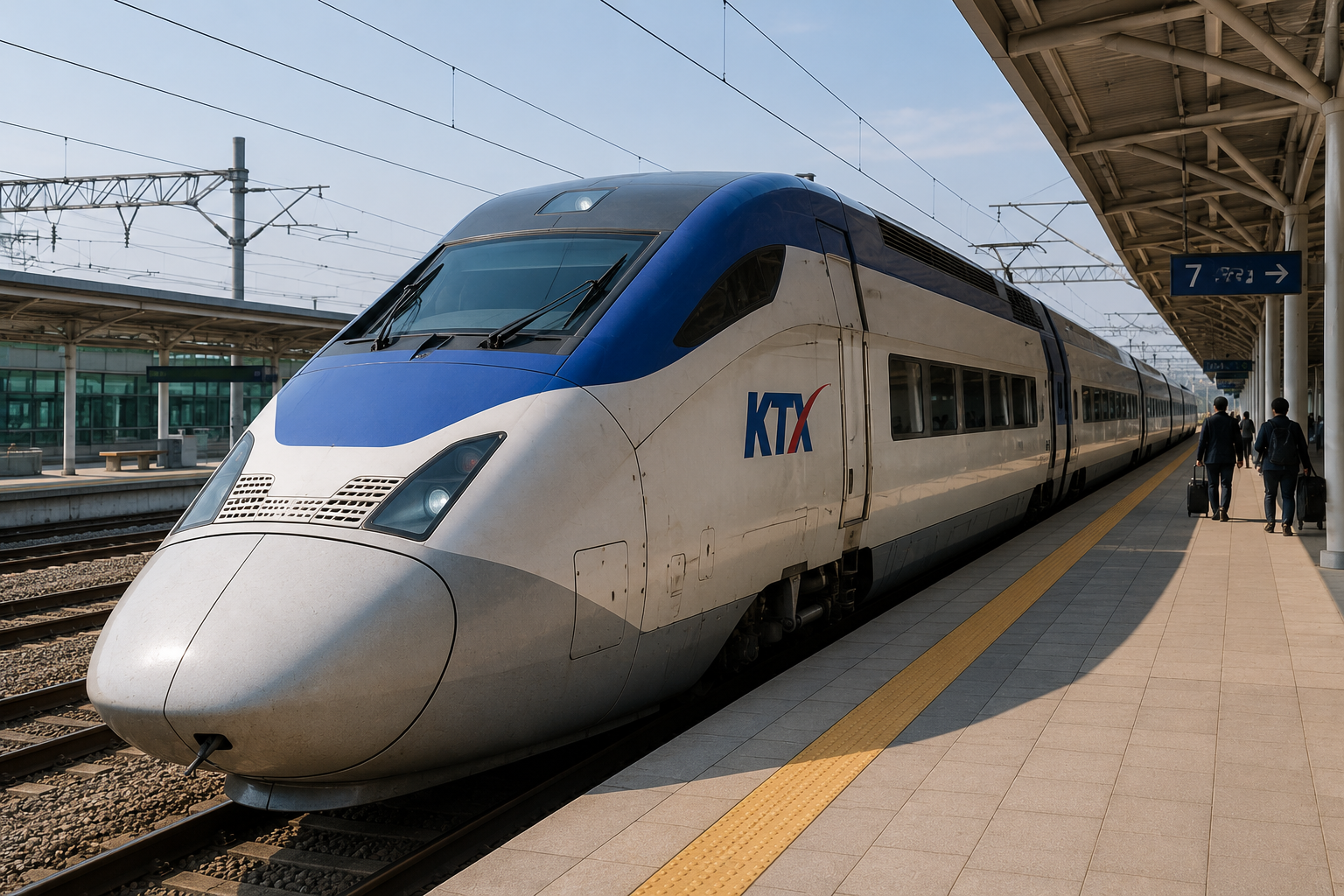
KTX (Korea Train eXpress) is Korea’s primary high-speed rail system and one of the fastest and most commonly used ways to travel long distance across the country. Like SRT, KTX is designed for fast travel between regions that would otherwise require long bus rides, heavy traffic, or domestic flights.
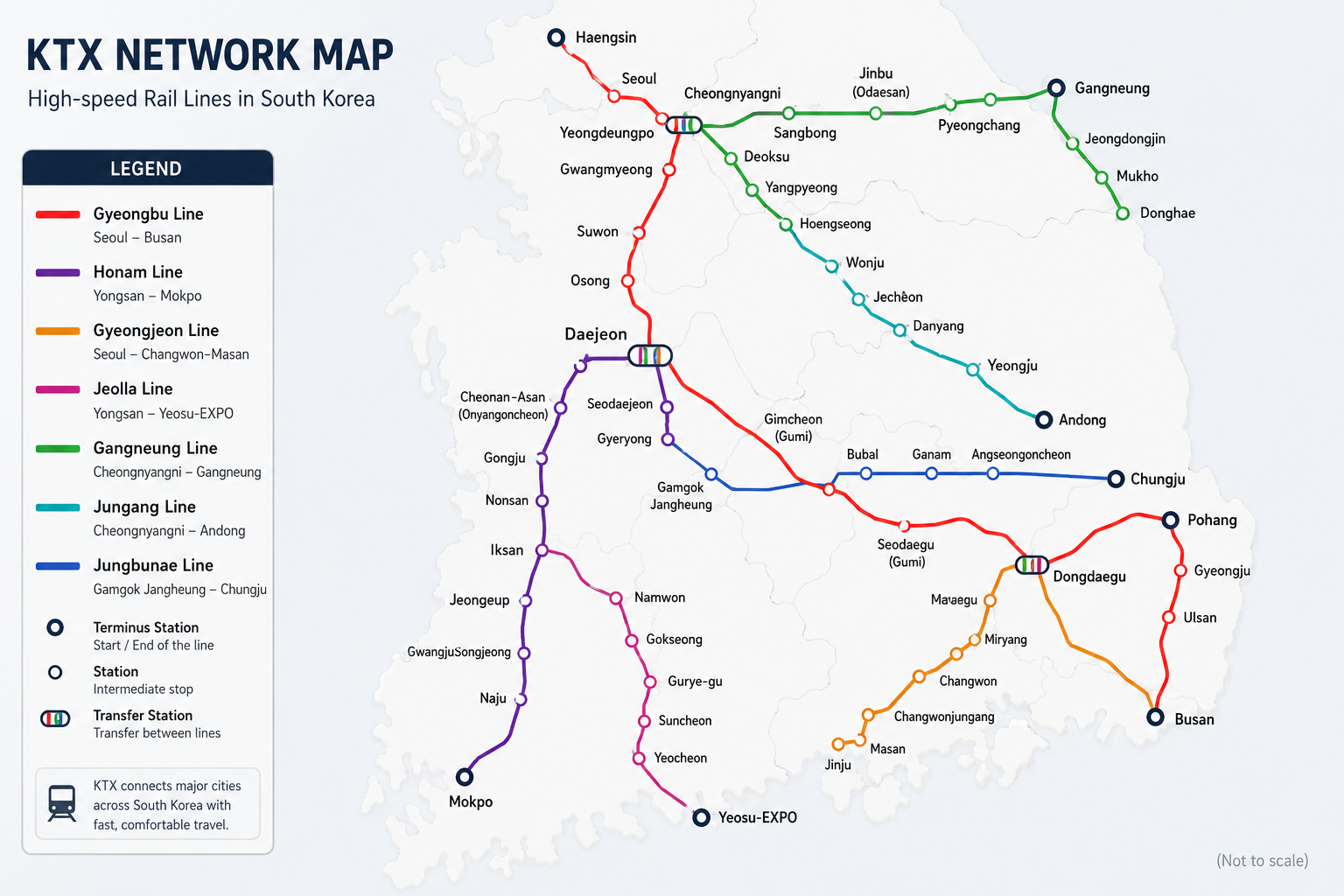
Because KTX and SRT use different routes and stopping patterns, the better option usually depends on:
- where you are starting from
- which station is closest
- and which route NAVER Map recommends for your destination
In actual use, however, the experience is very similar to SRT — clean, punctual, reliable, and straightforward even for first-time users.
There are three main ways to book KTX tickets:
- using the official website
- using the mobile app
- purchasing tickets directly at the station
The next sections will walk through each method and explain the important things USFK personnel should know before traveling.
✅ Booking KTX Through the Official Website
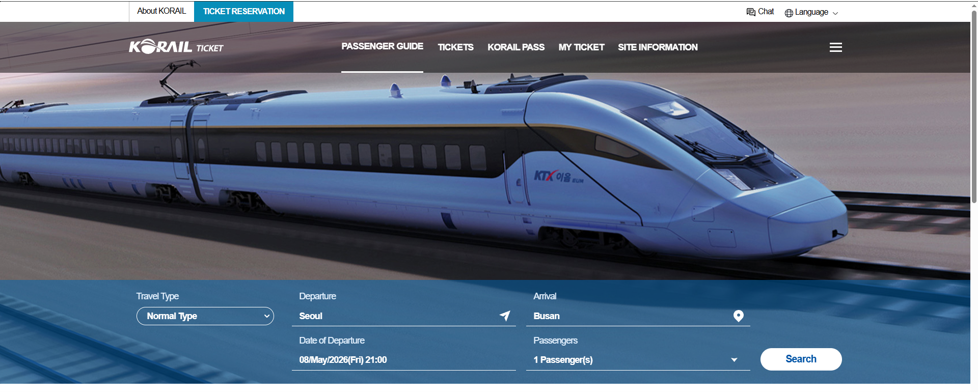
https://www.korail.com/global/eng/main
One of the easiest ways to book KTX tickets is through the official Korail website. The site supports English and allows users to search routes, reserve seats, and access digital tickets without needing to visit the station in person.
Just like with SRT, the easiest approach is to first search your trip in NAVER Map. When NAVER Map recommends a KTX route, it will usually show:
- the station you should depart from
- the station you should arrive at
Those are the station names you should enter into the booking page.
For example:
- If NAVER Map tells you to board at Seoul Station and get off at Busan Station
- Enter:
- Departure:
Seoul - Arrival:
Busan
- Departure:
Then select:
- travel date
- departure time
- number of passengers
and search available trains.
✅ Booking SRT Through the Mobile App
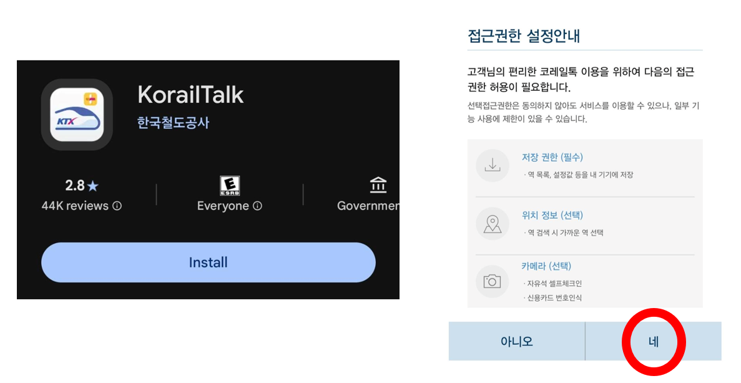
For many USFK personnel, the KTX mobile app is one of the most convenient ways to book train tickets once everything is set up. It allows you to search routes, reserve seats, access mobile tickets, and manage reservations directly from your phone without needing to print anything.
The official app used for KTX reservations is called KorailTalk (코레일톡) and is available on both iPhone and Android devices.
After installing and opening the app for the first time, several permission requests will appear in Korean because the language has not been changed to English yet. Tap the area highlighted with the red circle in the image above.
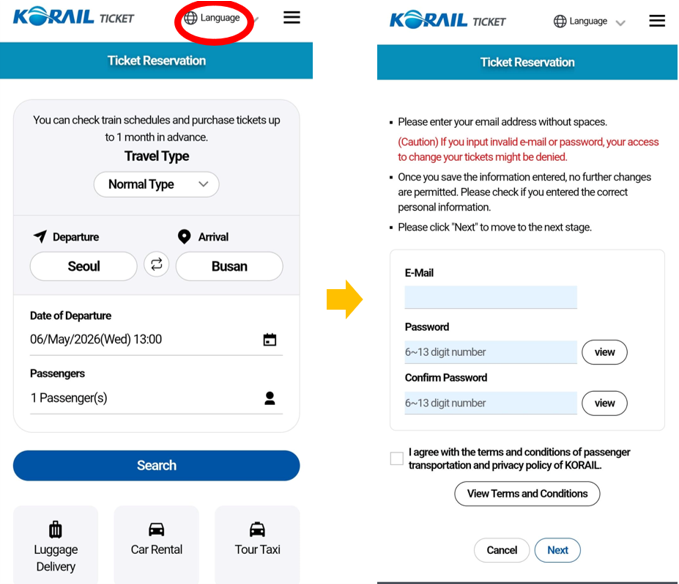
1️⃣ Searching for a Route
Just like with SRT, the easiest approach is to first check your trip in NAVER Map.
If NAVER Map recommends a KTX route:
- enter the departure station shown in NAVER Map
- enter the arrival station shown in NAVER Map
- select your travel date and passenger count
Then tap the search button to view available trains.
The app will display:
- departure times
- arrival times
- travel duration
- seat availability
for that route.
2️⃣ Passenger Information & Payment
After selecting a train, the app will move to the passenger information screen.
Foreign users are commonly asked for:
- email address
- password/PIN for ticket lookup
- passenger agreement confirmation
One important thing to understand is that the email and password entered here are often used later to access or verify the reservation. Because of this:
- avoid entering incorrect email information
- save the password/PIN somewhere accessible
If the information is entered incorrectly, retrieving the reservation later can become inconvenient.
3️⃣ CHAT support feature
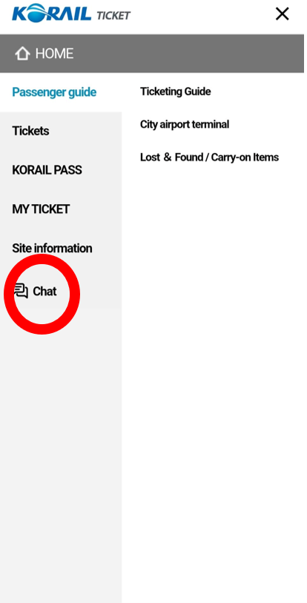
One useful feature for foreign travelers is that the KorailTalk app also provides a built-in CHAT support feature for international users.
As shown in the image above, the CHAT option can be accessed directly from the app menu. During operating hours, users can receive real-time assistance related to:
- ticket reservations
- train schedules
- general travel information
- basic booking issues
The service typically operates from:
- 08:00–20:00 (Korea Standard Time)
For first-time users unfamiliar with Korea’s rail system, this can be a helpful backup resource when something in the booking process becomes confusing.
✅ Buying KTX Tickets at the Station
KTX tickets can also be purchased directly at the station through:
- staffed ticket counters
- self-service ticket kiosks
For many USFK personnel, this becomes useful when:
- online payment fails
- travel plans change last minute
- or seats need to be purchased immediately on the day of travel
Most major KTX stations across Korea support both methods.
🔍 Ticket Counters vs Kiosks
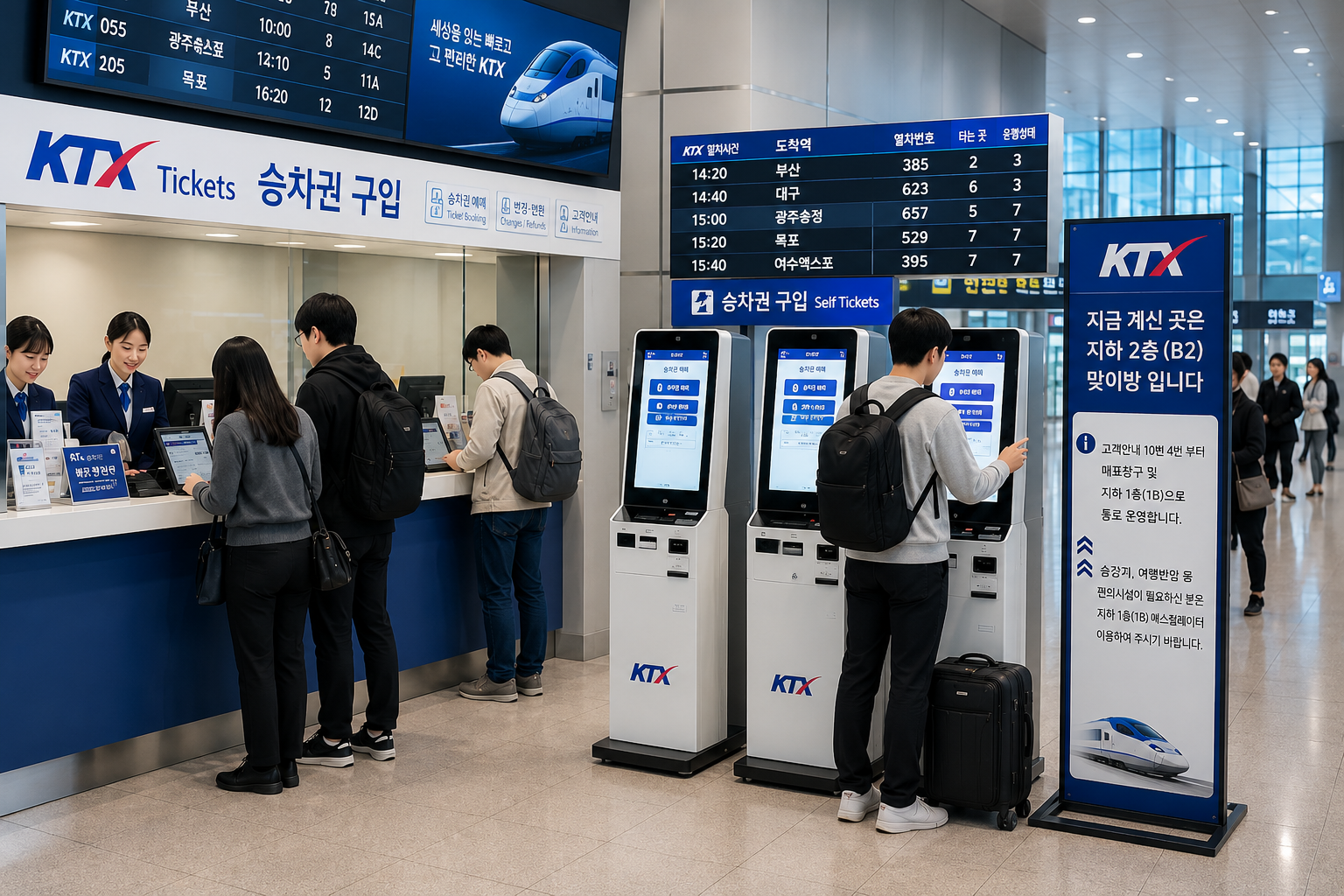
At larger stations such as:
- Seoul Station
- Yongsan Station
- Busan Station
- Dongdaegu Station
you will usually find both staffed counters and automated kiosks.
Staffed counters are often easier for first-time users because station employees can help with:
- route selection
- ticket changes
- standing ticket availability
- cancellation or refund questions
Meanwhile, kiosks are usually faster when:
- regular seats are still available
- payment works normally
- and you already know your route
Most kiosks support English menus, and the overall process is relatively straightforward without needing detailed setup.
🔍 Standing Tickets (입석)
If all seated tickets are sold out, KTX may still offer:
- standing tickets (입석)
through station purchase.
These are commonly used when:
- you absolutely need to board that specific train
- but normal reserved seats are no longer available
Standing or unreserved tickets are usually less comfortable than normal reserved seating because:
- seats are not guaranteed
- you may need to stand for large portions of the trip
For longer routes such as:
- Seoul ↔ Busan
- Seoul ↔ Gwangju
this can become tiring fairly quickly.
However, during peak travel periods, they can still be extremely useful as a backup option instead of missing the train entirely.
✅ Additional Things to Know Specifically for KTX
Most of the general booking and boarding precautions discussed in the SRT section — such as ticket inspections, sellout risks, platform checks, screenshots of tickets, and standing tickets — apply to KTX as well.
However, one thing that tends to confuse foreign travelers more specifically with KTX is that the KORAIL system also includes several different types of trains besides KTX.
When searching routes or buying tickets, you may also see:
- ITX
- Mugunghwa (무궁화호)
- Saemaeul (새마을호)
listed alongside KTX trains.
For first-time users, these can look similar inside the booking system, but they are not the same type of service.
KTX is the high-speed option used for long-distance travel between major cities, while trains like ITX or Mugunghwa are generally slower and make more stops along the route.
Because of this, when booking long-distance travel, make sure the train you are selecting actually says:
👉 KTX
and not another train type with a much longer travel time.