
🔹 What This Guide Covers
- How the KBO League works (season, postseason, and roster rules
- What makes KBO different from MLB
- How Korean baseball culture and fan experience actually feel
- MLB comparisons that help you understand each team
- Key traits that define each KBO team
✅ What Is the KBO League?

If you’ve only watched baseball in the U.S., KBO (Korea’s professional baseball league) will feel familiar — but not the same.
The rules are mostly identical to MLB, but the game experience is completely different. Stadiums are louder, fans are constantly engaged, and the overall atmosphere feels closer to a live event than a typical baseball game.
But what really stands out is how popular baseball is in Korea.
Even during a normal weekday commute, it’s common to see people on the subway watching games on their phones or checking live scores. Baseball isn’t just something people watch occasionally — it’s part of everyday life.
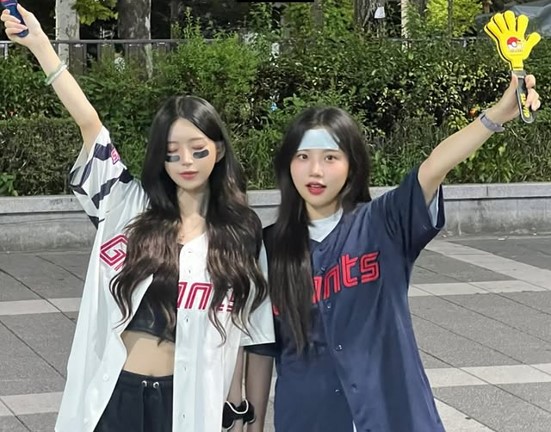
In recent years, the fanbase has expanded even more. A growing number of female fans and younger audiences have made the culture feel more accessible and social. You don’t need to be deeply into stats or even that athletic to enjoy it — people follow teams for the atmosphere, the players, and the experience.
Baseball in Korea isn’t niche — it’s something people actively follow and talk about on a daily basis.
✅ How the League Works (What’s Actually Different)

KBO has 10 teams playing a 144-game regular season, similar to MLB in length.
The season typically starts in March and runs through the fall, with the postseason beginning around October.
In Korea, the playoffs are often referred to as “fall baseball” (가을야구) — a term you’ll hear a lot once the season gets close to the end.
The biggest difference comes in the postseason.
Instead of a full bracket like MLB, KBO uses a step-ladder system, where lower-ranked teams have to fight their way up:
- #5 vs #4 → Wild Card
- Winner plays #3
- Winner plays #2
- Winner goes to the Korean Series
👉 Higher seeds have a huge advantage, often needing to win fewer games.
✅ Foreign Player Rules (Big Difference from MLB)

Roster construction is much more restricted than in MLB.
Each team is limited to:
- 3 foreign players total
- Usually 2 pitchers + 1 hitter
- Plus 1 Asian quota player (separate slot)
This forces teams to rely heavily on domestic talent, which is why you’ll notice fewer “all-star stacked” rosters compared to MLB.
At the same time, many of these foreign players are former MLB players or high-performing Triple-A players, often coming to Korea after a slump or in search of a fresh opportunity.
👉 Because of this, you might actually recognize some familiar names when watching KBO games.
✅ What Feels Different During Games

If you go to a game expecting an MLB-style experience, you’ll immediately notice:
- Fans never stop cheering
- Each player has their own chant, and the entire stadium sings along together
- The whole crowd actively participates throughout the game
In recent years, there’s also been a unique fan trend where individuals sketchbooks with messages, hoping to get featured on the broadcast camera.
👉 It’s less “sit and watch” and more “be part of the game.”
🏟 KBO Teams (With Real MLB Comparisons)
⚫ Kiwoom Heroes (Seoul)

Closest MLB Team: Tampa Bay Rays
Kiwoom consistently competes despite having fewer financial resources. But they are also well known for being one of the best teams at developing talent and sending players to MLB.
However, that success comes with a downside.
👉 Because of constant talent outflow, the team often struggles to maintain consistent results and tends to stay in the lower half of the standings.
Still, they have produced multiple current MLB players, including:
- Jung Hoo Lee (San Francisco Giants)
- Kim Ha-seong (Atlanta Braves)
- Kim Hye-seong (Los Angeles Dodgers)
- Sung-Mun Song (San Diego Padres)
👉 A classic “develop and export” team.
🔵 Doosan Bears (Seoul)

Closest MLB Team: St. Louis Cardinals
Doosan is defined by its “Hustle Doo” identity — relentless defense, aggressive baserunning, and high-effort play built around younger players.
At the center of that system has been a veteran catcher who anchors the team, both defensively and in game management.
👉 This is where the comparison to the Cardinals becomes clear.
Much like Yadier Molina did for St. Louis, Doosan has relied on a catcher-led structure, where the game is controlled from behind the plate rather than through individual star power.
- Strong emphasis on defense, fundamentals, and discipline
- Leadership driven from the catcher position
- A system that makes the team consistently competitive
👉 Their peak came between 2015 and 2021, when they reached the Korean Series seven straight times, one of the most dominant runs in KBO history.
🔴 LG Twins (Seoul)
Closest MLB Team: Chicago Cubs
LG has one of the largest and most loyal fanbases in Korea, but for a long time, they were known for underperforming despite high expectations.
That changed recently.
👉 They ended a 29-year championship drought in 2023 (first title since 1994) and followed it up with another title in 2025, and are now widely considered the strongest team in KBO.
What really defines this team now is not just talent, but how they are managed.
👉 LG is known for excellent in-game management, strong bullpen usage, and well-organized defensive strategies.
👉 Their success is heavily driven by the manager’s ability to make the right decisions at the right time, especially in close games.
They don’t rely on flashy, high-risk baseball.
Instead, they win through tight defense, smart substitutions, and disciplined game control.
🟡 Kia Tigers (Gwangju)

Closest MLB Team: New York Yankees
Kia is the most successful franchise in KBO history.
They have won the Korean Series 12 times, the most in league history, which defines their identity as a true legacy team.
Their fanbase is large and passionate, and expectations are always high — winning is not a bonus, it’s the standard.
👉 Like the Yankees:
- Winning tradition is part of the identity
- Strong roster depth and expectations every season
- Just like the Yankees in MLB, Kia holds the record for the most championships in KBO history
👉 Fun connection for MLB fans: Blue Jays pitcher Eric Lauer, who delivered 4⅔ scoreless innings in Game 3 of the 2025 World Series (Dodgers vs. Blue Jays), previously played for Kia Tigers in 2024.
🔵 Samsung Lions (Daegu)

Closest MLB Team: New York Mets
Samsung had one of the greatest dynasties in KBO history, highlighted by four straight unified championships from 2011 to 2014, a feat that remains unique in the league.
Today, the team is in a transition phase, building around a younger roster with more speed and athleticism, though they can be slightly inconsistent compared to their peak years. Their smaller home stadium also tends to produce more home runs, adding to their offensive potential.
👉 Like the Mets, Samsung has experienced cycles of strong performance, and when everything comes together, they can quickly become a dangerous team.
👉 Fun connection for MLB fans: Connor Seabold, who played for Samsung Lions in 2024, is now part of the Detroit Tigers’ 40-man roster in 2026 as a bullpen pitcher.
🟠 Hanwha Eagles (Daejeon)

Closest MLB Team: Baltimore Orioles
Hanwha used to be a bottom-tier team, but that’s starting to change.
👉 Current identity:
- Years of rebuilding
- Multiple years of No. 1 overall draft picks
- Veteran anchor: Hyun-jin Ryu — a former Cy Young runner-up during his time with the Los Angeles Dodgers
👉 Recently:
- Finished as runner-up last season, falling just short of a championship
👉 Orioles comparison:
- Long rebuild → now a serious contender
- Built around a young core + development success
👉 Fun connection for MLB fans: Cody Ponce and Ryan Weiss, who formed one of the strongest starting duos in the league for Hanwha last season, have joined the Toronto Blue Jays and Houston Astros, respectively, in 2026.
🔵 SSG Landers (Incheon)

Closest MLB Team: Boston Red Sox
SSG is one of the most “win-now” teams in KBO.
- Strong financial backing
- Star players
- Deep bullpen (arguably the best in the league)
👉 One thing to know:
If SSG is leading the game by the 7th inning,
it’s usually not a great sign for the other team.
👉 Like the Red Sox:
- Built to compete every year
- Depth + resources
👉 Fun connection for MLB fans: Merrill Kelly, who played a key role for SSG from 2015 to 2018, has gone on to win 65 games with the Arizona Diamondbacks since 2019.
Also, Drew Anderson, who was part of SSG’s starting rotation in 2025, is now listed as a bullpen pitcher for the Detroit Tigers in 2026.
🔴 Lotte Giants (Busan)
Closest MLB Team: Philadelphia Phillies
Lotte is defined by fan culture, not performance.
- Busan (2nd largest city) → massive local support
- Entire city backs the team
- Stadium atmosphere is intense regardless of record
👉 Like the Phillies:
- Fan energy is part of the identity
- Emotional, loud, and always engaged
🟢 KT Wiz (Suwon)
Closest MLB Team: Texas Rangers
KT is a newer team but already proven competitive.
- Fast rise after expansion
- Balanced roster
- Already won a title
- Added key free agents this season and backed by a solid domestic starting rotation
👉 Like the Rangers:
- Not historically dominant
- But capable of quickly becoming a top team
KT Wiz is aiming to compete for the top tier this season with several impactful FA signings and a strong starting lineup.
If your phone carrier is KT, why not support KT Wiz as your team?
👉 Fun connection for MLB fans: Former KT starting pitcher Enmanuel Jesus is now playing for the Detroit Tigers in 2026 and earned his first win as a reliever on March 28, 2026.
🟣 NC Dinos (Changwon)

Closest MLB Team: Houston Astros
NC is a modern team built on data, development, and efficiency.
- Strong player development
- Smart roster construction
- Rapid rise after being a newer team
👉 Like the Astros:
- Built through systems and analytics
- Efficient, calculated success
👉 Fun connection for MLB fans: Erick Fedde, who was one of the best starting pitchers in the league during the 2023 season with NC, is currently playing for the Chicago White Sox.
Eric Thames, who was one of NC’s top hitters in 2015 and 2016, later moved to MLB and hit a total of 96 home runs in his career.