
🔹 Korean Convenience Stores at a Glance
Convenience stores are everywhere in Korea, and they play a much bigger role in daily life than many newcomers expect.
The three largest chains you will see most often are GS25, 7-Eleven and CU, with stores located in residential neighborhoods, near subway stations, around office areas, and close to many USFK installations.
While convenience stores in the United States are often associated with gas stations or quick snacks, Korean convenience stores function as small neighborhood food hubs as well as retail stores. Many students and office workers regularly stop by throughout the day to grab something quick to eat.
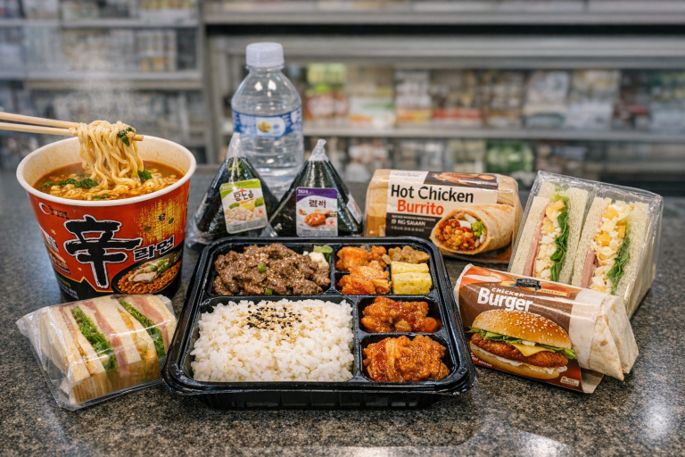
Most locations carry a wide range of ready-to-eat options, including items such as instant ramen, triangle kimbap (samgak kimbap), burritos, sandwiches, burgers, and boxed meals (dosirak). Because stores usually provide microwaves, hot water dispensers, and small eating areas, it is common for people to buy food and eat it immediately inside the store or just outside the entrance.
For many people living in Korea, convenience stores are not just places to buy snacks—they are quick and reliable spots to solve a meal, pick up drinks, or grab something on the way home.
In the sections below, this guide will share several practical tips that can help USFK members make the most of Korean convenience stores, starting with a few basic features you will see in almost every store.
✅ Using the Microwave and Hot Water Station

One feature that many newcomers notice quickly is the self-service microwave and hot water station.
Most stores provide a small area where customers can heat food or prepare instant meals immediately after purchase. This makes convenience stores a quick place to solve a meal without going home.
After paying for the item, customers can bring the food to the microwave station and heat it themselves. Stores usually also provide utensils, napkins, and trash bins nearby.
For ramen, convenience stores often have a hot water dispenser, allowing customers to open the cup ramen and fill it with hot water directly in the store.
Because of this setup, convenience stores in Korea often function as quick places to grab and eat a simple meal, especially for students, office workers, or people looking for something late at night.
✅ Convenience Store Ready Meals (Quick Full Meals)
Now that you know convenience stores provide microwaves and hot water stations, here are some of the most common ready-to-eat meals you’ll find and a quick guide on how to prepare them.
🔍 Triangle Kimbap
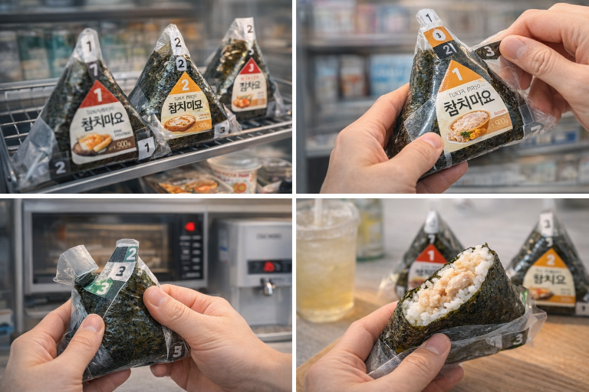
Triangle kimbap is one of the most iconic convenience store foods in Korea. It’s a rice ball wrapped in seaweed and filled with ingredients like tuna mayo, bulgogi, spicy pork, or kimchi.
How to eat it:
- Follow the numbered strip on the wrapper (usually labeled 1 → 2 → 3).
- Pull the tabs in order.
- The plastic separates the rice and seaweed so the seaweed stays crisp.
- Once opened, you can eat it immediately.
Triangle kimbap is usually ₩1,000–₩2,000 ($0.80–$1.50) and makes a quick snack or light meal.
🔍 Convenience Store Dosirak (Lunch Boxes)

Dosirak are complete meal boxes that typically include rice, a main dish, and several side items. Common items include fried chicken, pork cutlets, bulgogi, sausages, eggs, or stir-fried vegetables.
How to prepare it:
- Peel back the plastic film slightly.
- Place the container in the microwave station inside the store.
- Heat for about 1–2 minutes.
- Open the lid and eat.
These usually cost around ₩4,000–₩7,000 ($3–$5) and are one of the easiest ways to get a filling meal quickly.
🔍 Cup Ramen
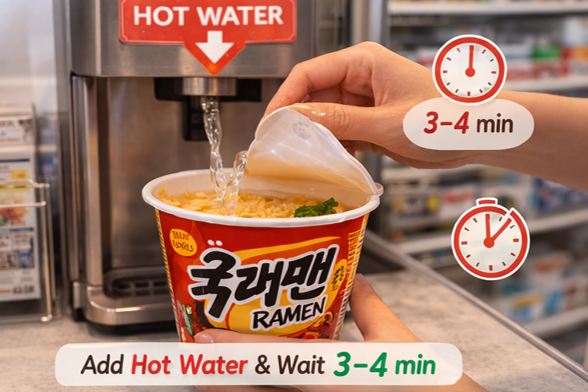
Cup ramen is extremely popular and almost every Korean convenience store has a hot water station specifically for this.
How to prepare it:
- Open the lid halfway.
- Add the seasoning packets inside the cup.
- Fill the cup with hot water from the dispenser.
- Close the lid and wait 3–4 minutes.
After that, the noodles are ready to eat. Many stores also provide chopsticks near the microwave or hot water station.
Cup ramen usually costs about ₩1,200–₩2,500 ($1–$2).
🔍 Convenience Store Burgers & Sandwiches
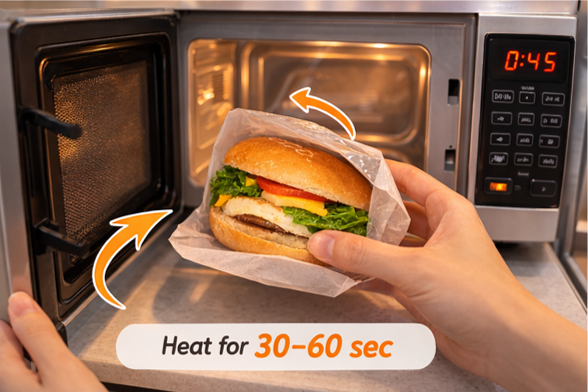
You’ll also find a large selection of burgers, sandwiches, and breakfast-style wraps in the refrigerated section.
How to prepare them:
- Bring the item to the counter and pay.
- Ask the cashier to heat it in the microwave, or use the microwave station yourself.
- Heat for about 30–60 seconds.
These are usually priced around ₩2,500–₩4,500 ($2–$3.50) and are popular as quick breakfasts.
🔍 Burritos and Hot Wraps

Many Korean convenience stores sell burrito-style wraps filled with ingredients like chicken, rice, cheese, or spicy sauce.
How to prepare it:
- Slightly open the wrapper.
- Heat it in the microwave for about 40–60 seconds.
- Eat it directly from the wrapper.
These are often ₩3,000–₩4,500 ($2–$3.50) and are a quick, portable meal.
Overall, Korean convenience stores function almost like mini fast-food spots where you can buy, heat, and eat a full meal in just a few minutes. Many stores even have small seating areas, making them a convenient place to take a quick break and eat.
✅ Mix-and-Match Beer Deals (The Popular “4 Can” Promotion)
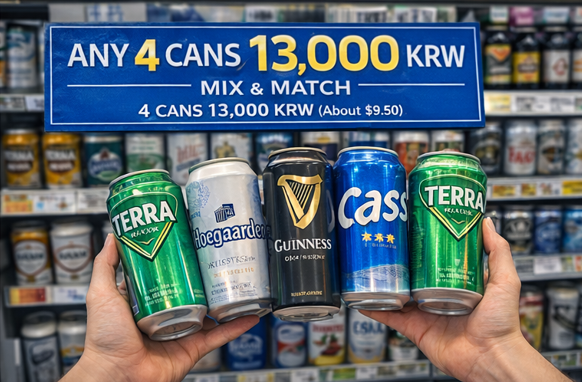
Another useful feature in Korean convenience stores is the beer bundle deal, commonly known as the “4 can promotion.”
Instead of buying beer individually, convenience stores often allow customers to pick any four cans together at a discounted bundle price.
As of recently, the most common price for this promotion is around 13,000 KRW (about $9.50) for four 500 mL cans. Some smaller 330 mL beers are still sometimes sold at around 10,000 KRW (about $7.30) for four cans.
Buying the same beers individually usually costs a bit more, so the bundle deal typically saves a few dollars compared to purchasing each can separately.
Another convenient feature is that you can usually mix different beers within the same bundle. You do not need to choose four of the same brand. Many stores allow customers to combine Korean beers and imported beers freely as long as they are part of the promotion section.
To find these deals, simply look for signs in the beer refrigerator area showing phrases like “맥주 4캔” The beers displayed in that section are usually eligible for the bundle promotion.
✅ A Small Tip: Check Items Behind the Front Row

One small tip locals often know is related to how products are arranged on convenience store shelves.
Most stores organize items using a first-in, first-out system, meaning products that were stocked earlier are placed at the front of the shelf so they sell first.
Because of this, items at the very front sometimes have shorter remaining shelf life compared to the products placed behind them.
If you are buying something you plan to keep for a few days—such as milk, sandwiches, or ready meals—it can be helpful to check the items behind the front row, which may have a later expiration date.
This is a small detail, but it can help when you want food that will last a little longer.
✅ Separate Trash Bins
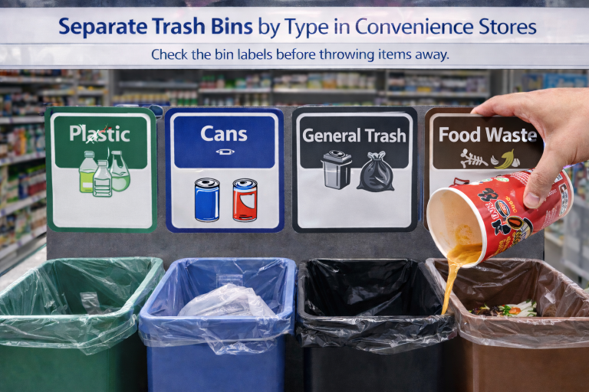
Another small difference you may notice in Korean convenience stores is that trash bins are usually separated by type rather than using a single bin.
Near the eating area, you will often see multiple labeled bins, commonly including plastic, cans, general trash, and sometimes food waste. Customers are expected to place items in the appropriate bin.
This is most noticeable when eating items like cup ramen inside the store. After finishing, people usually pour out any remaining liquid first, then dispose of the empty cup and packaging in the correct recycling bin.
It’s a simple system, but for first-time visitors it can be slightly confusing at first. Checking the bin labels before throwing items away usually makes it clear where everything should go.
🔧 Next: Advanced Convenience Store Tips
If you want to get even more value from Korean convenience stores, the next guide covers several advanced tips that many regular customers use.
These include how 1+1 and 2+1 promotions work, how to store extra promotion items through convenience store apps, and how to use membership barcodes or telecom discounts for additional savings.