
🔹 What This Guide Covers
Now that you know how to find routes using NAVER Map, let’s look at how the Korean subway system actually works.
This guide explains the subway system in the most practical way—focused on real-use situations, not over-explained basics.
Because Korea’s network is so extensive, you can reach most areas by subway (often with just one short transfer).
This page will provide a concise overview of the essentials, including Korea’s subway signage system, local vs express trains, transfer navigation, first/last-train and exit checks in NAVER Map, and common on-the-go problem solving. Together, these core points will help you understand the Korean subway system more clearly and prepare for mistakes before they happen.
✅ Korean Subway Lines: Colors and Platforms
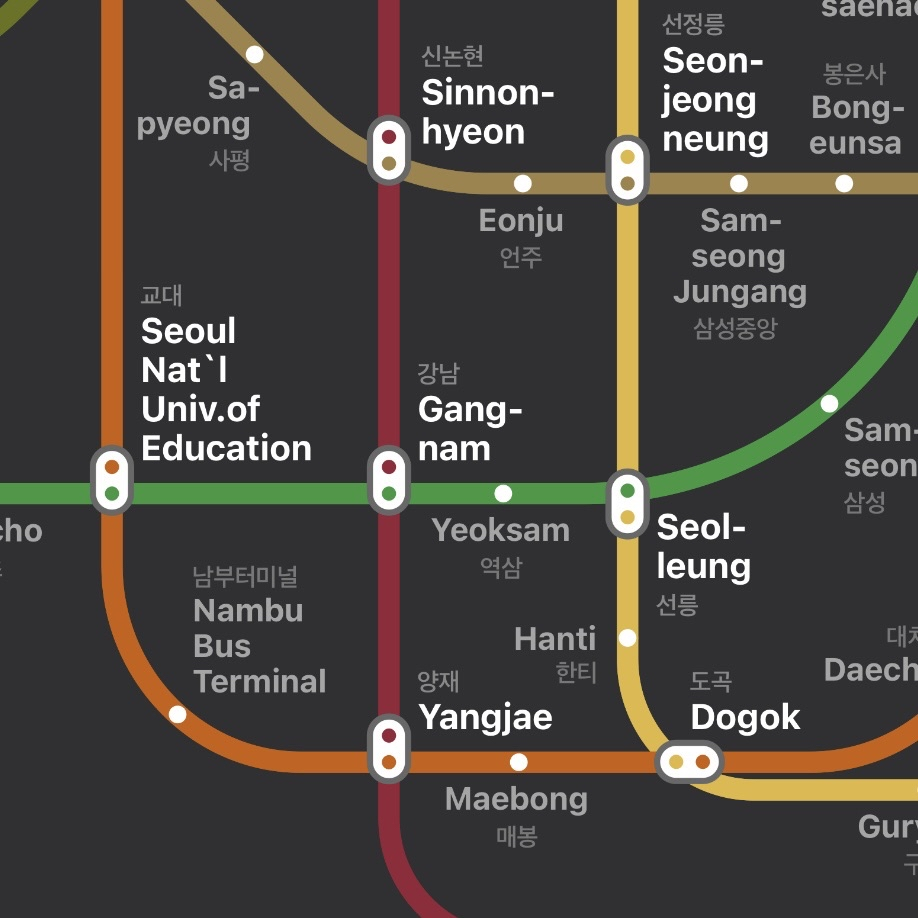
Korean subway lines are organized by color, and that color system is the first thing you should follow.
A single station can be served by one line—or by multiple lines at the same time. In busy areas, it’s common for 3–4 lines to connect at or around the same station zone.
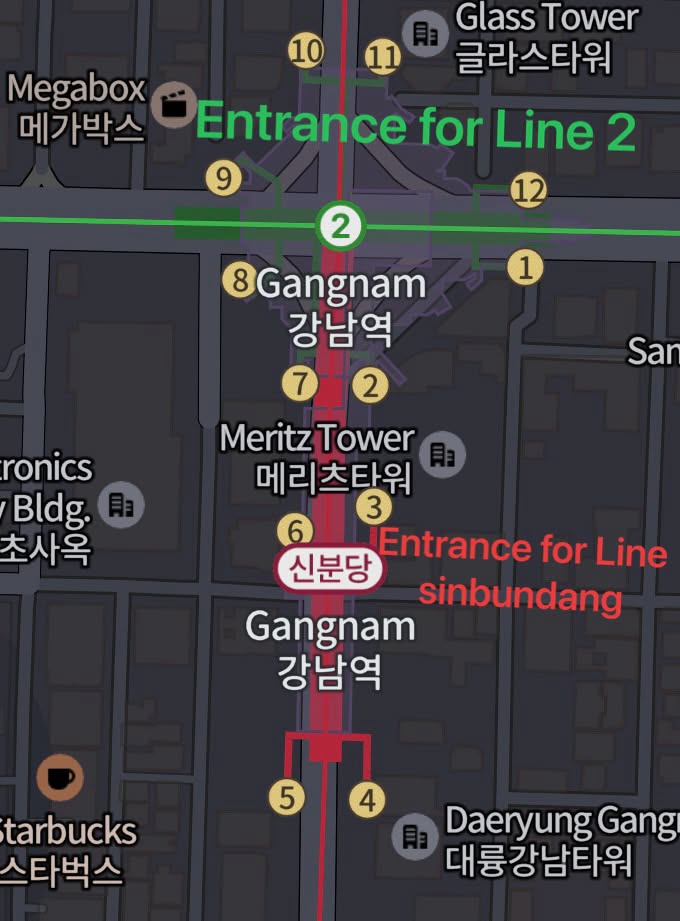
Because of that, the same station name can have different platforms for different lines.
For example, at Gangnam, Line 2 and the Sinbundang Line share the same station name, but the boarding areas are not the same as the image above.
These platforms are usually connected underground, but that does not mean they are right next to each other. Walking time can vary, and in large stations the transfer path can be longer than expected.
So in real use, the key is simple:
don’t navigate by station name only.
Before you go in, check NAVER Map and confirm:
- which line you need,
- where that line’s platform/entrance area is
In short, station name tells you where you are, but line tells you which train you should actually take.

As you can see in the image, Korea has many subway lines, each represented by a different color. You don’t need to memorize which color matches which line. When you select a route in NAVER Map, the app already shows the exact line color and transfer flow for you.
So at this stage, it’s enough to know that there are many color-coded lines in the system—and that you can rely on NAVER Map to guide you through the correct one.
✅ Local vs Express (and Why Terminal Stations Matter)
On some lines, you’ll see both local and express trains.
- Local trains stop at all stations
- Express trains stop only at selected stations
Before boarding, check two things:
- Does this train stop at your destination?
- Is the terminal station direction correct?
You can confirm both in two ways.
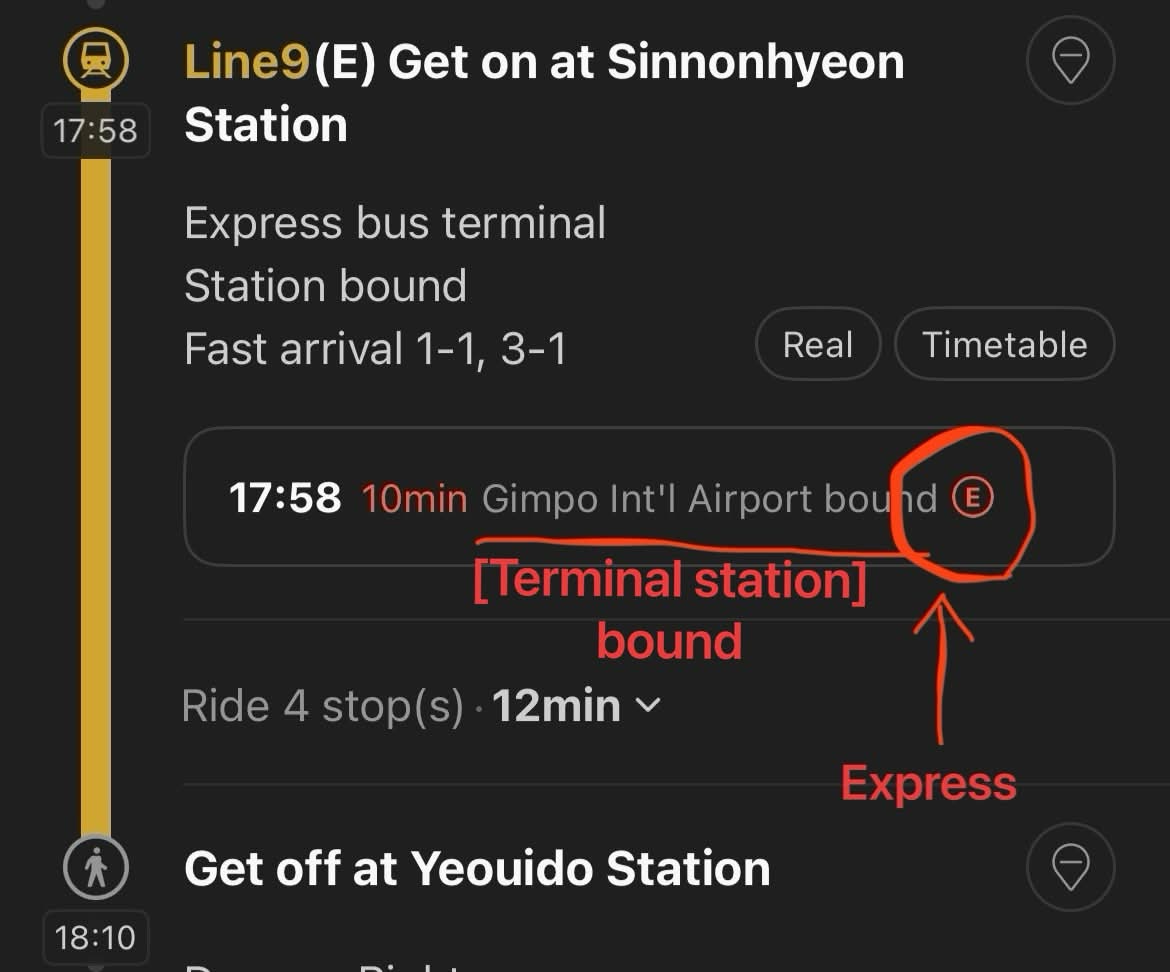
First, as the image shown above, check NAVER Map by selecting your route and opening route details (and if you’re new to NAVER Map, see the previous guide first).
Second, at the platform, check the display above the screen doors as the train approaches—it shows whether the train is local or express and its terminal destination.
⚠️ A common specific confusion point:
Even if it’s not marked as express, trains on the same line may have different terminal destinations. That means your train might end earlier than you expected.
If that happens, don’t panic:
Get off at that terminal station and take the next train continuing in your direction.
But don’t worry—NAVER Map already takes this into account when building your route. The route time table is calculated based on actual train patterns, including whether a train is local or express and where it terminates.
✅ Transfers: Easy Signs, Long Walks
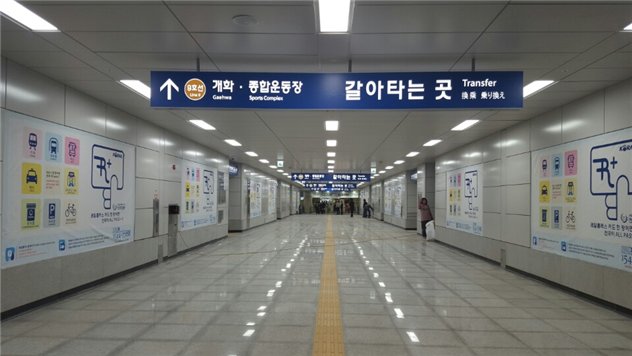
The good news: transfer navigation is usually straightforward.
In most stations, you can follow:
- Line color
- Transfer signs
- Arrow directions
The part many people underestimate is walking time.
Some transfer corridors are long enough to take 5–10 minutes, especially at large stations.
As explained earlier,
“same station name” does not always mean “same platform area.”
Depending on the line combination, transfer distance can feel much longer than expected.
⚠️ Card tagging during transfers
In many cases, subway transfers are free or add only a very small amount depending on the route.
So whenever you pass a fare gate, make sure to tag carefully so the system calculates your fare correctly.
Always tag out at your final exit gate.
For bus-connected trips, proper tap-in/tap-out is especially important.
✅ First/Last Trains and Exit Numbers

NAVER Map lets you check first and last train times by direction before you leave.
If you want to know the first and last train times for a specific subway line at a certain station, simply search for the station name in the NAVER Map app and check the details as shown in the picture above.
This is especially useful in the evening, when missing the last train can disrupt your entire trip.
When reviewing a route, make sure the timing works for your full trip—not just the first segment.
If you’re traveling late, always plan with the last train in mind.
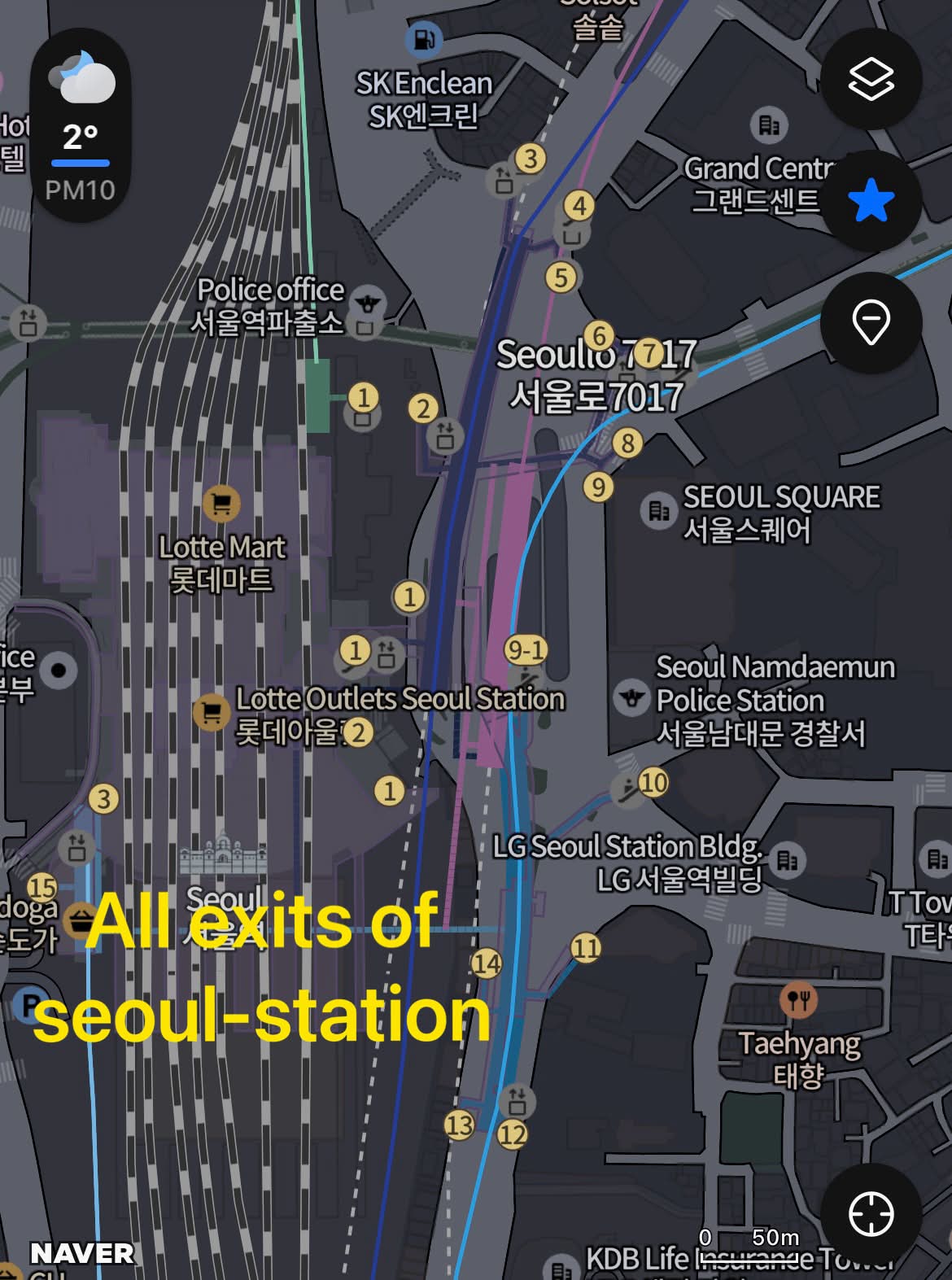
Many Korean subway stations have multiple exits, and each exit leads to a different street point.
So even if you arrive at the correct station, choosing the wrong exit can add significant walking time.
Before you go, check the recommended exit number in NAVER Map.
In larger stations, using the right exit can easily save 10+ minutes.
✅ Subway Etiquette in Korea

You don’t need to be perfect, but these norms help a lot:
- Let passengers get off first, then board.
- Keep phone calls short and quiet.
- Avoid strong-smelling food on trains.
- In crowded times, wearing your backpack in front is considerate.
- For priority and pregnancy seats, many people in Korea choose to keep them open even when they look empty.
Following this local norm is seen as thoughtful, and people usually appreciate it.
✅ If Something Goes Wrong: Quick Fixes
Even locals make mistakes. Here’s the fast recovery playbook:
🚨 You boarded in the wrong direction
👉 Get off at the next station, cross to the opposite platform, and board the correct direction train.
🚨 Your card balance is too low
👉 Recharge at:
- Station recharge machine
- Convenience stores in/near stations
🚨 You forgot your T-money card
👉 Use a single-journey transit card from station machines (good backup option). The machine looks like the one shown below.
.jpg)
🚨 Your train ended before your destination
👉 If terminal destination differs, just get off there and board the next train that continues your route.